In my third pottery class, I decided to take hand-building rather than wheel-throwing. I wanted to expand my skills and be able to combine the two methods by adding hand-built elements to my wheel-thrown pieces.
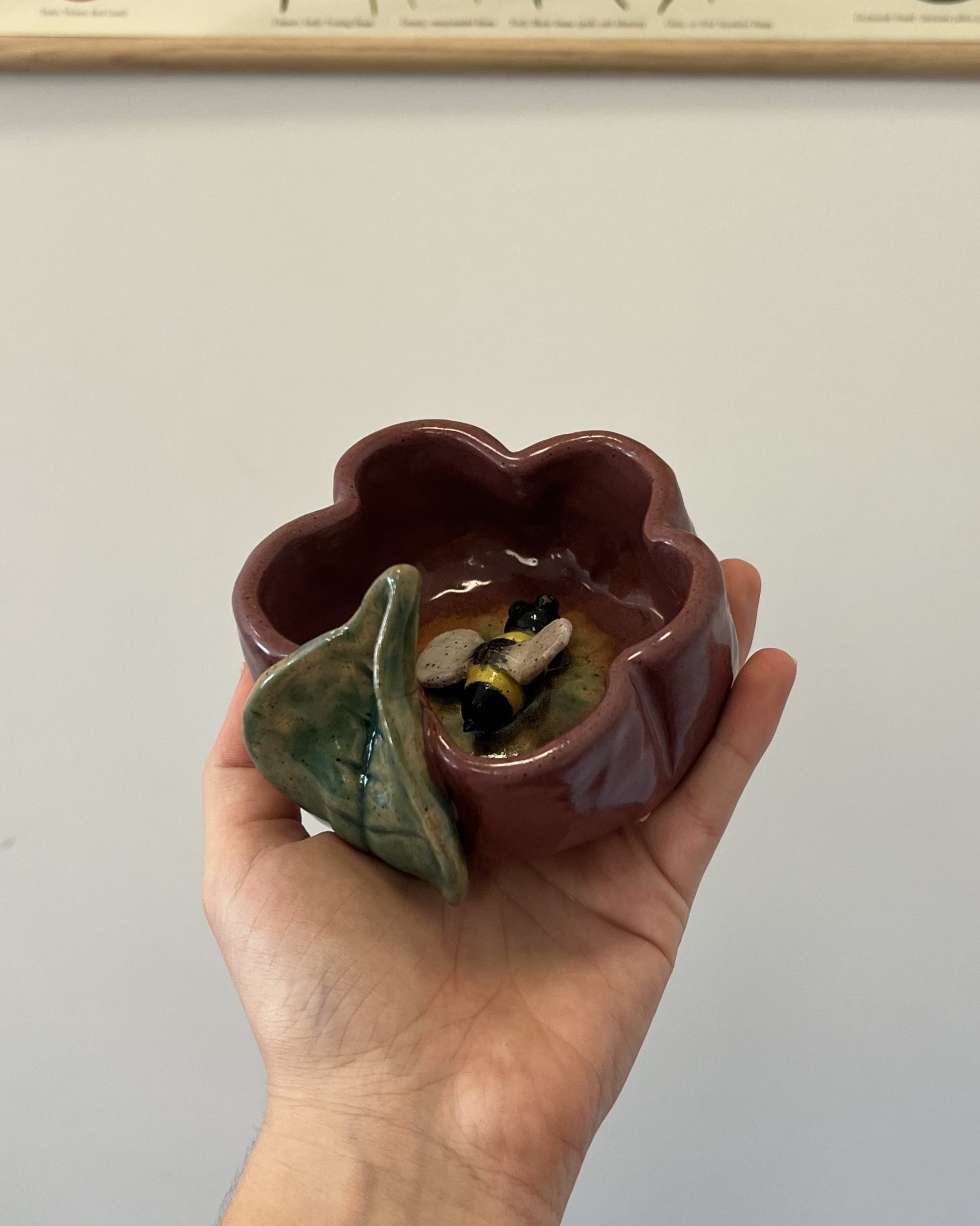
Because of the broad range of hand-building techniques, it added an element of freedom with design choices.
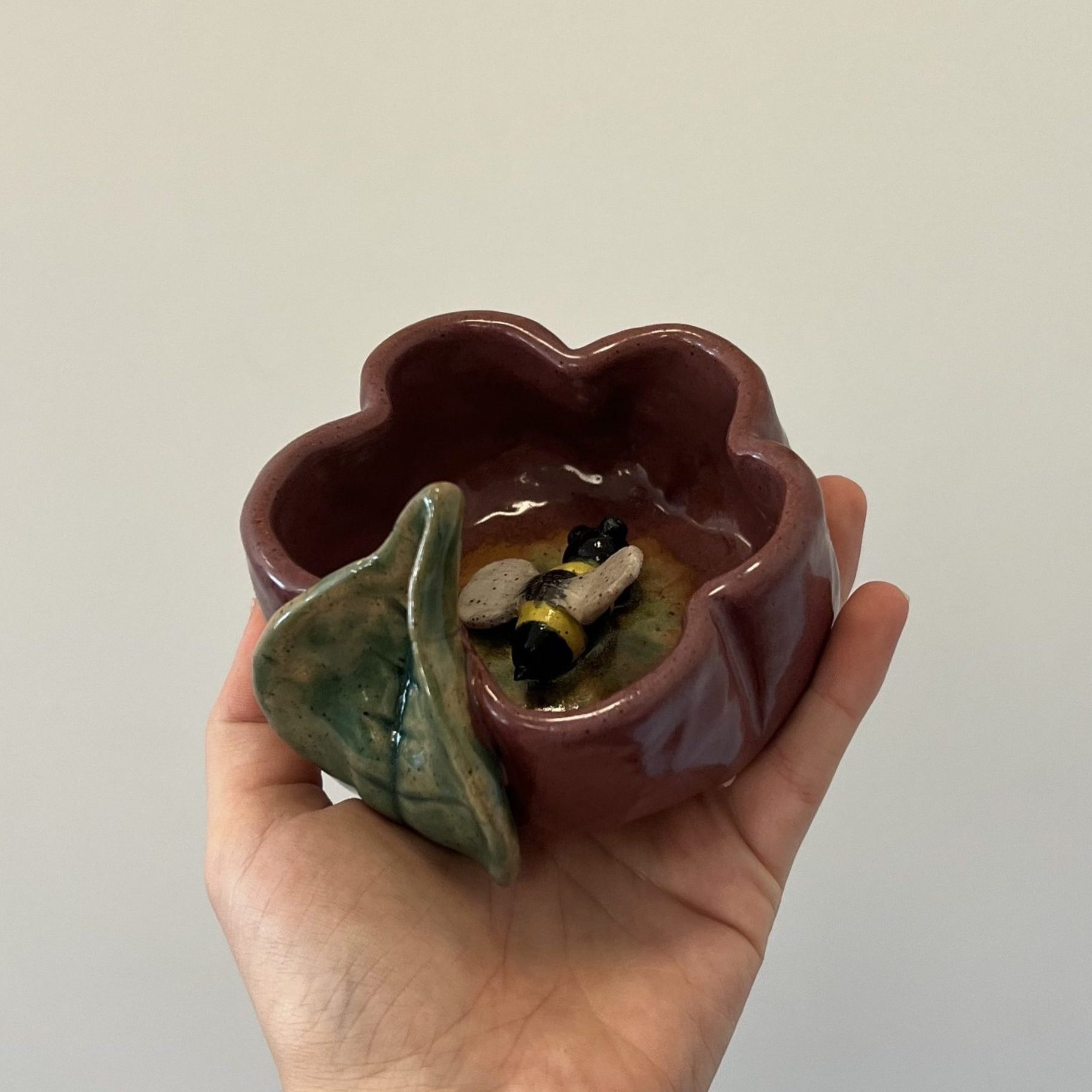
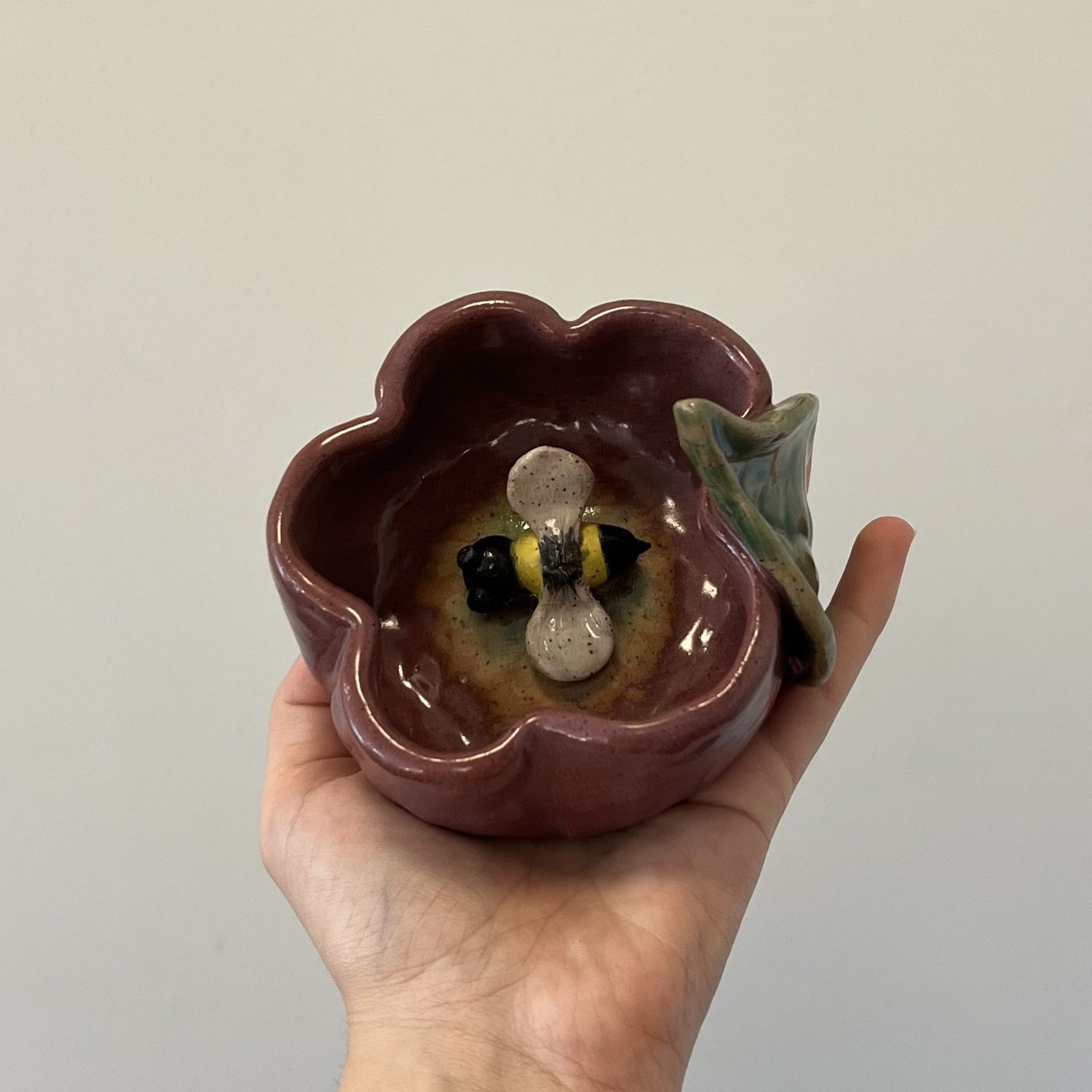
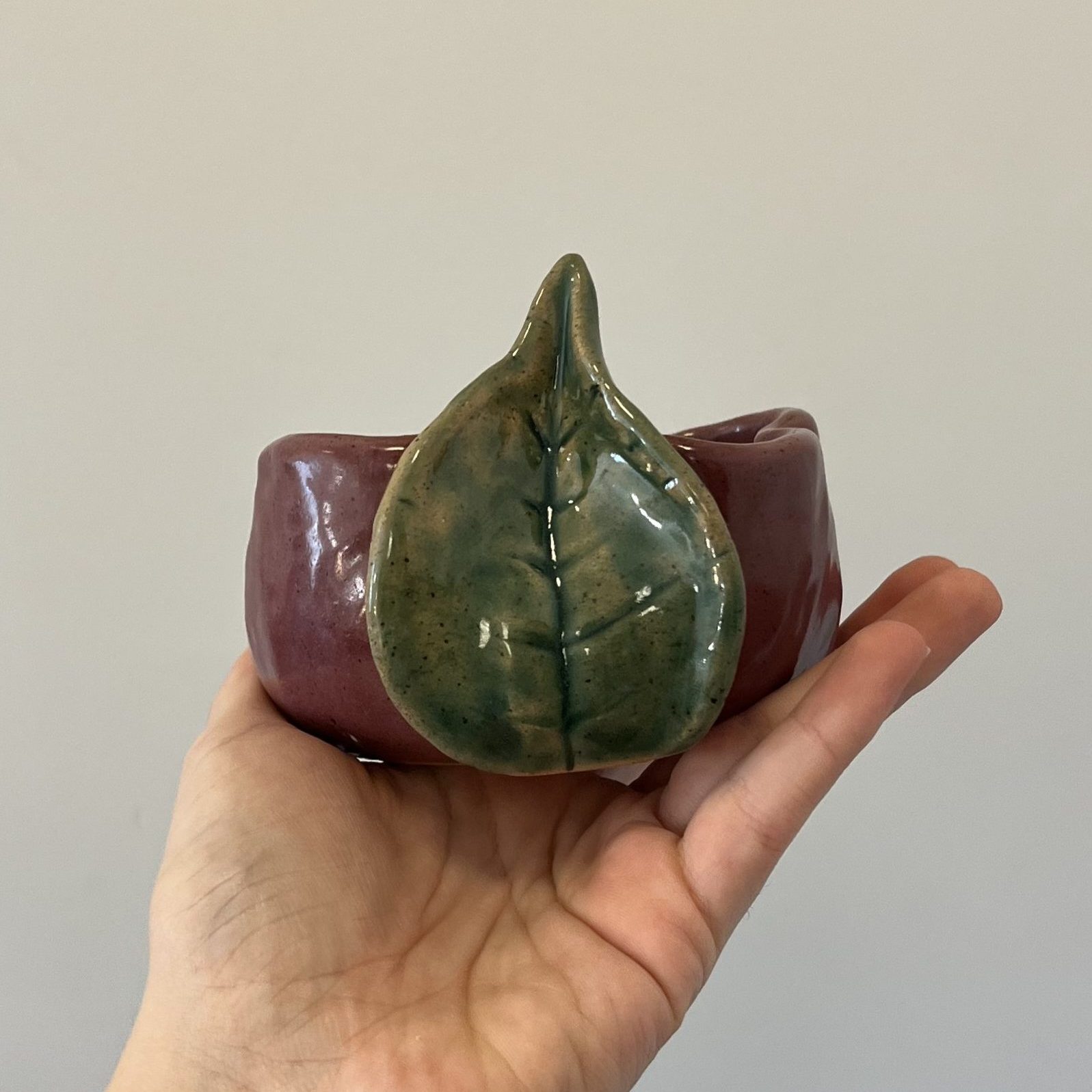
The first project we worked on in this class was making pinch pots. This project also allowed me to work with underglazing and adding multiple glazes on one piece.
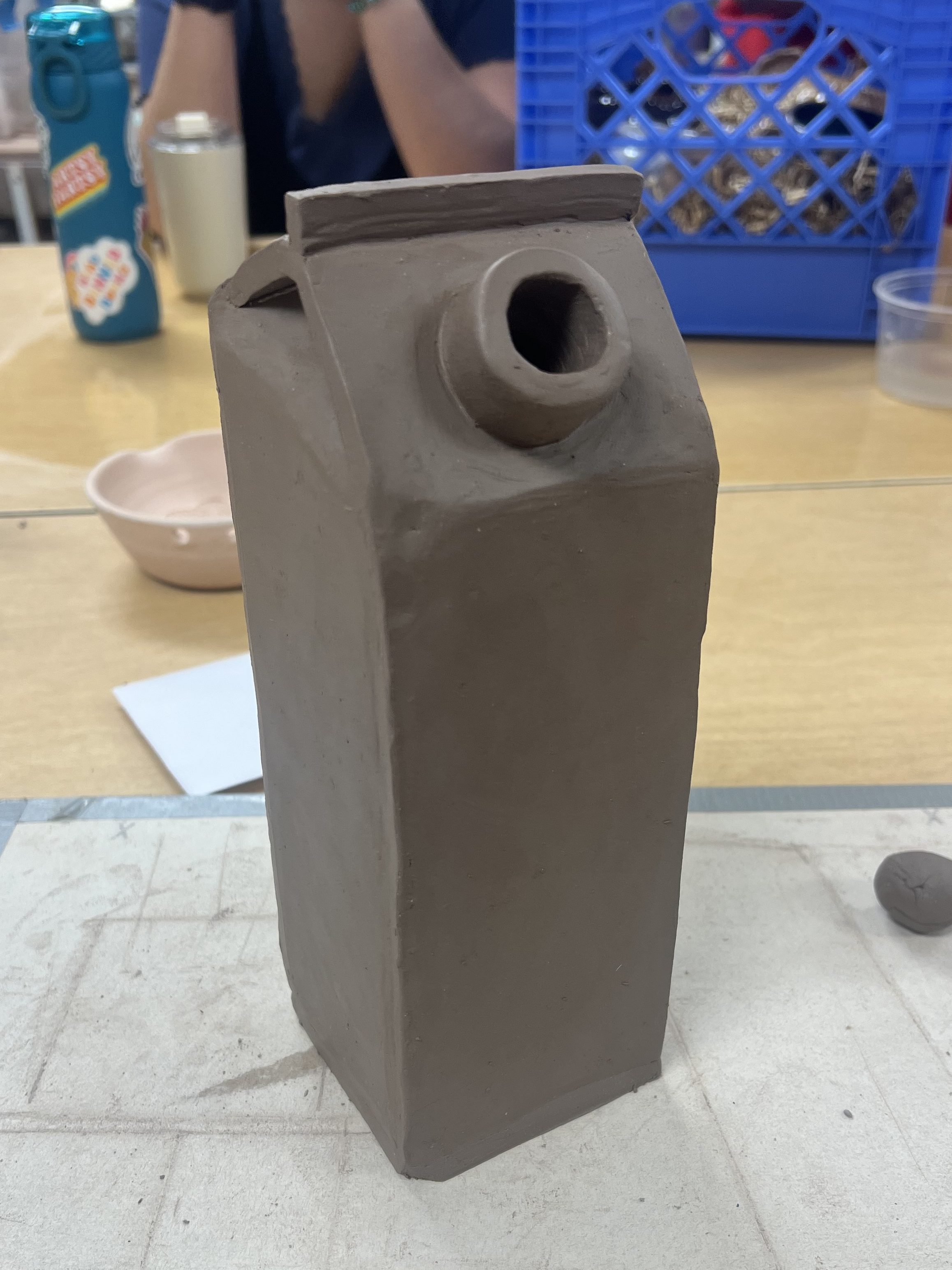
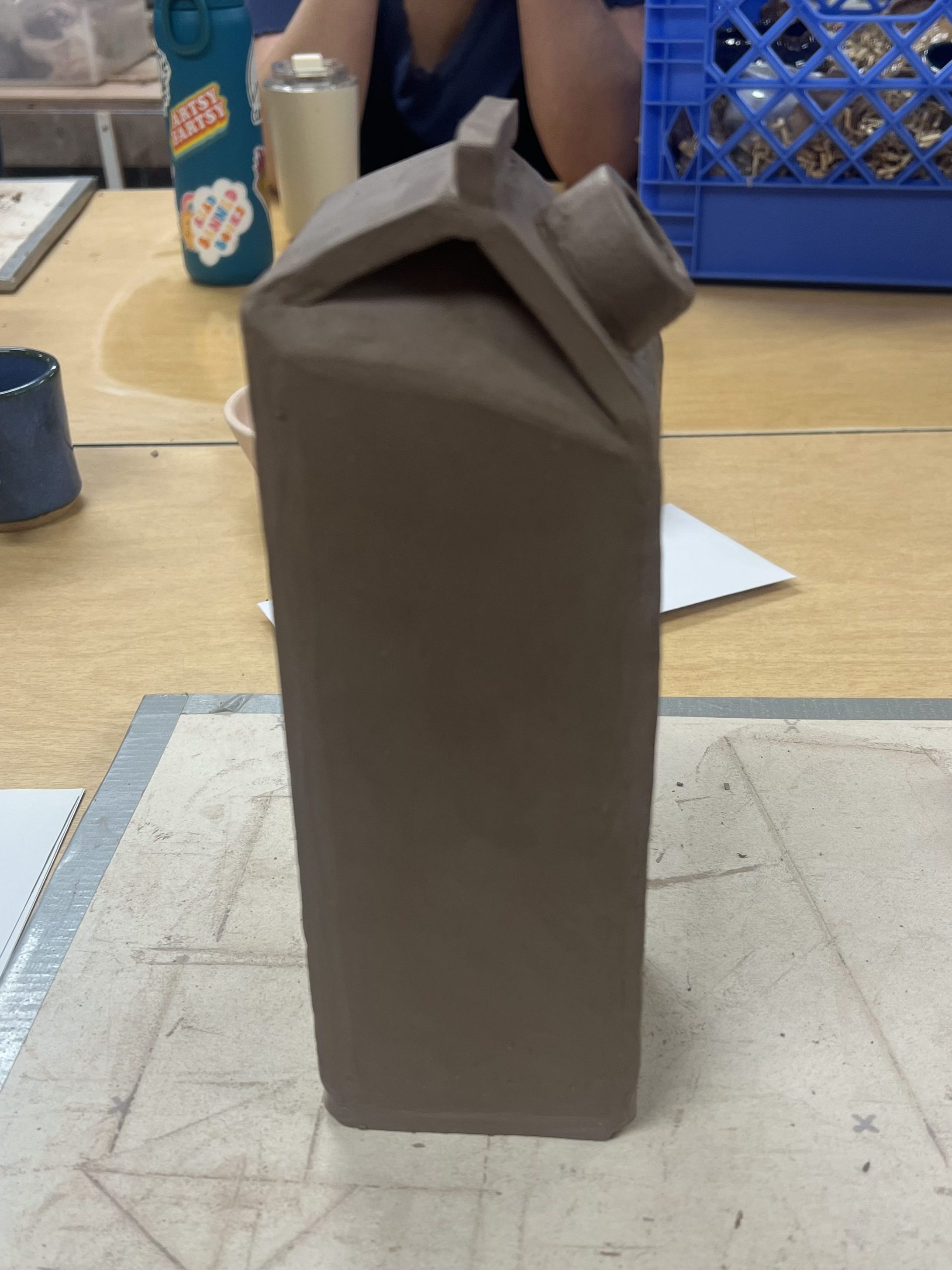
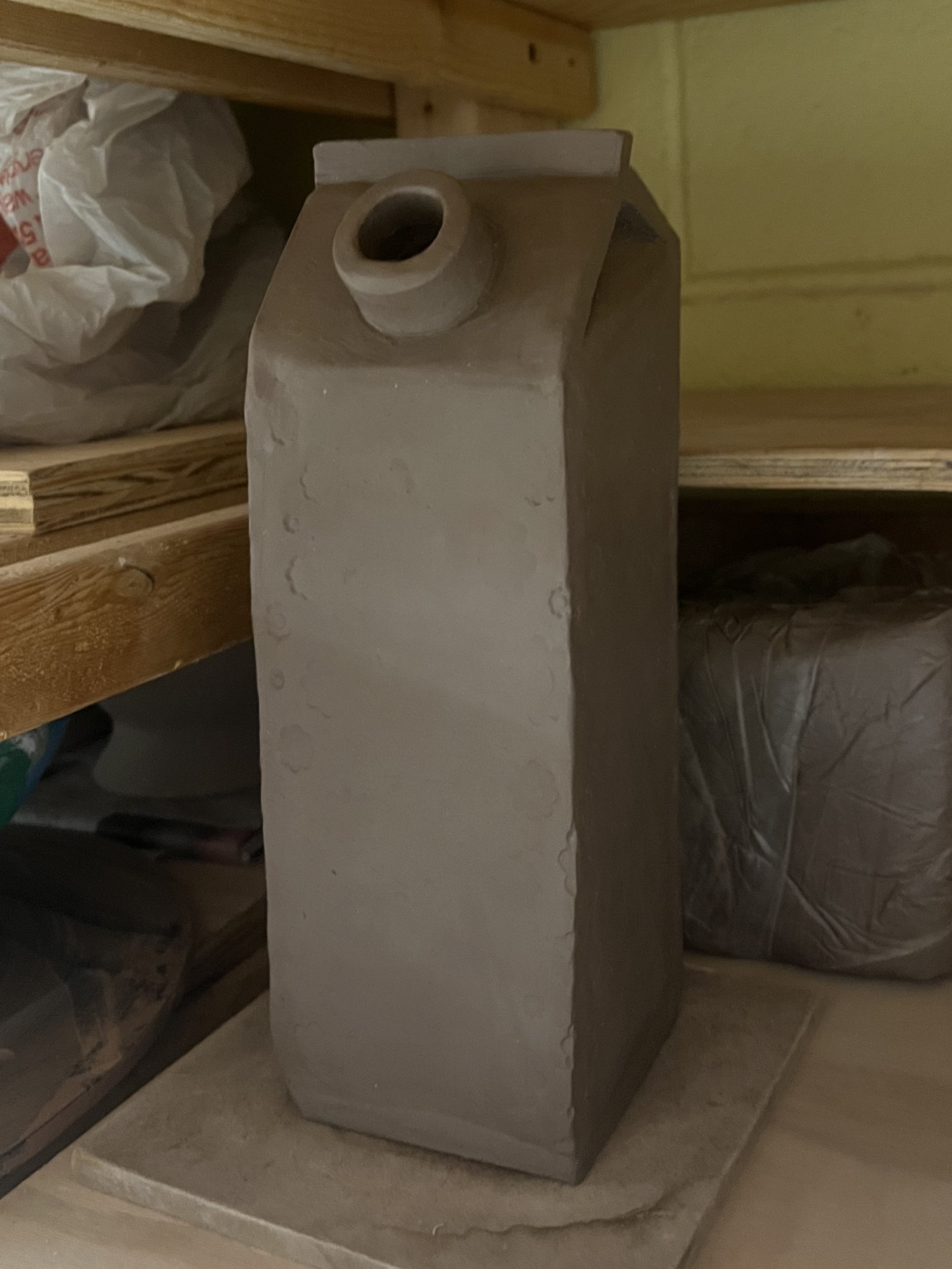
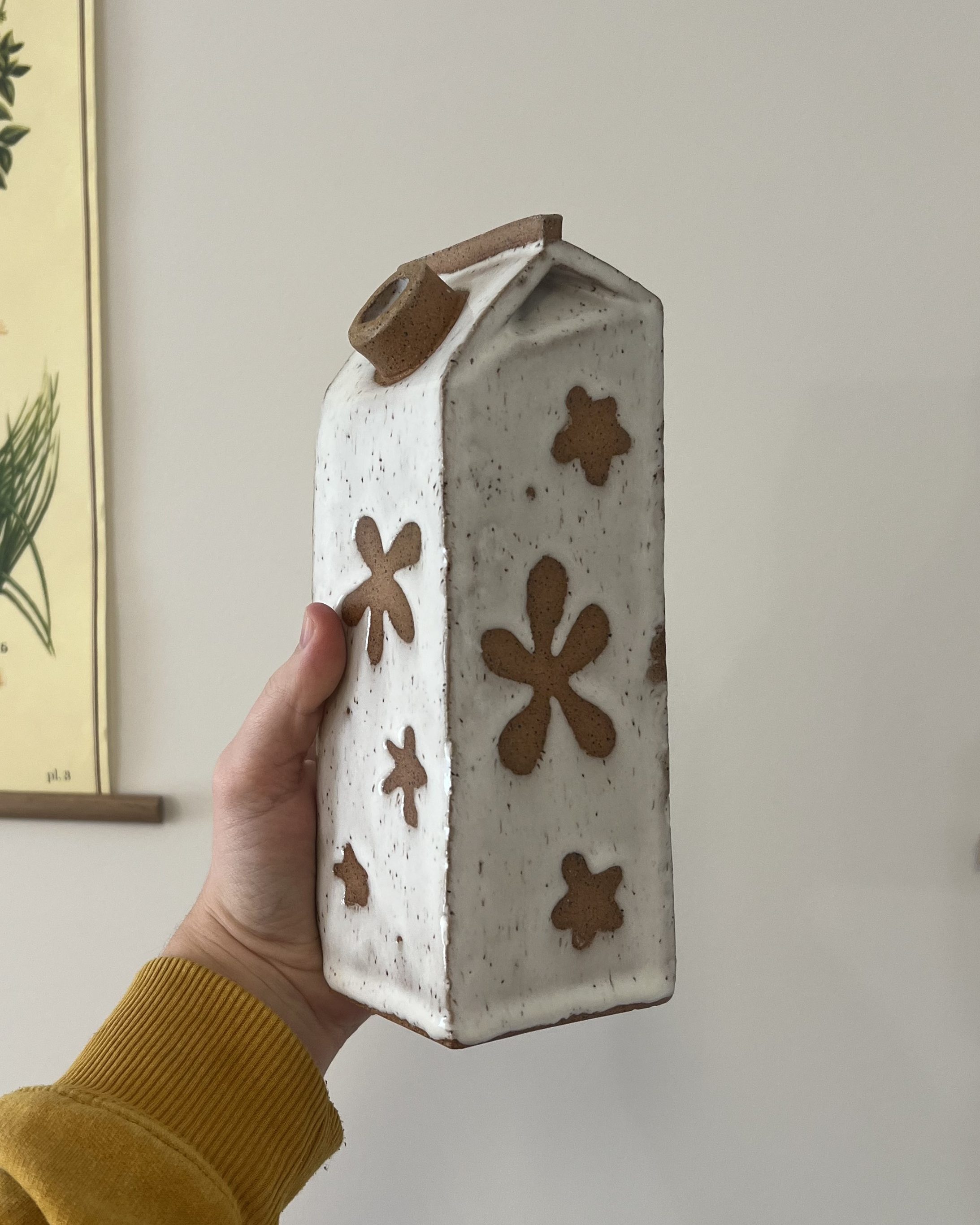
Next, we did soft slab building (but I chose a design that was more of a stiff slab build). I believe that this pattern is from @pottery.by.denise on Instagram.
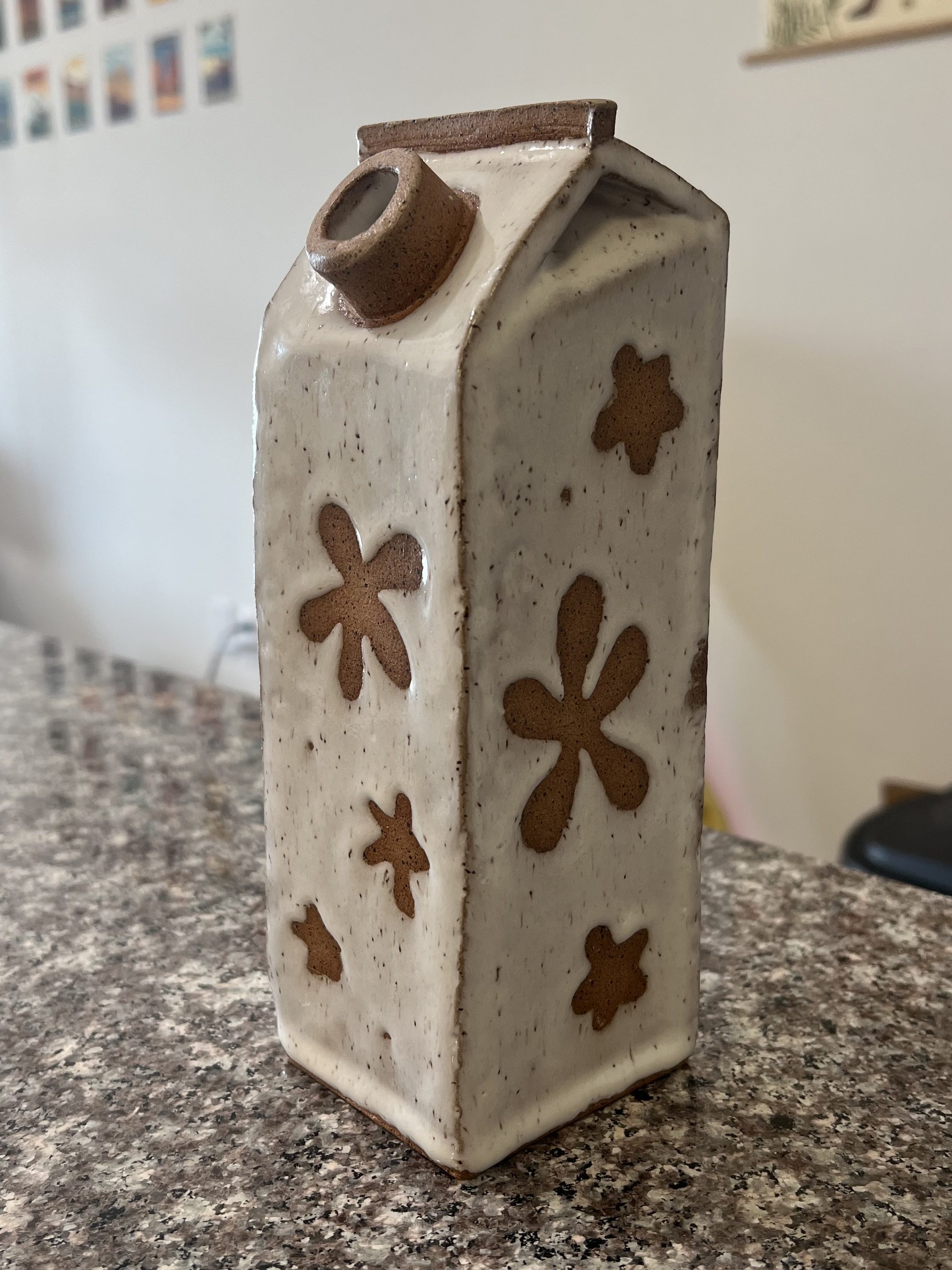
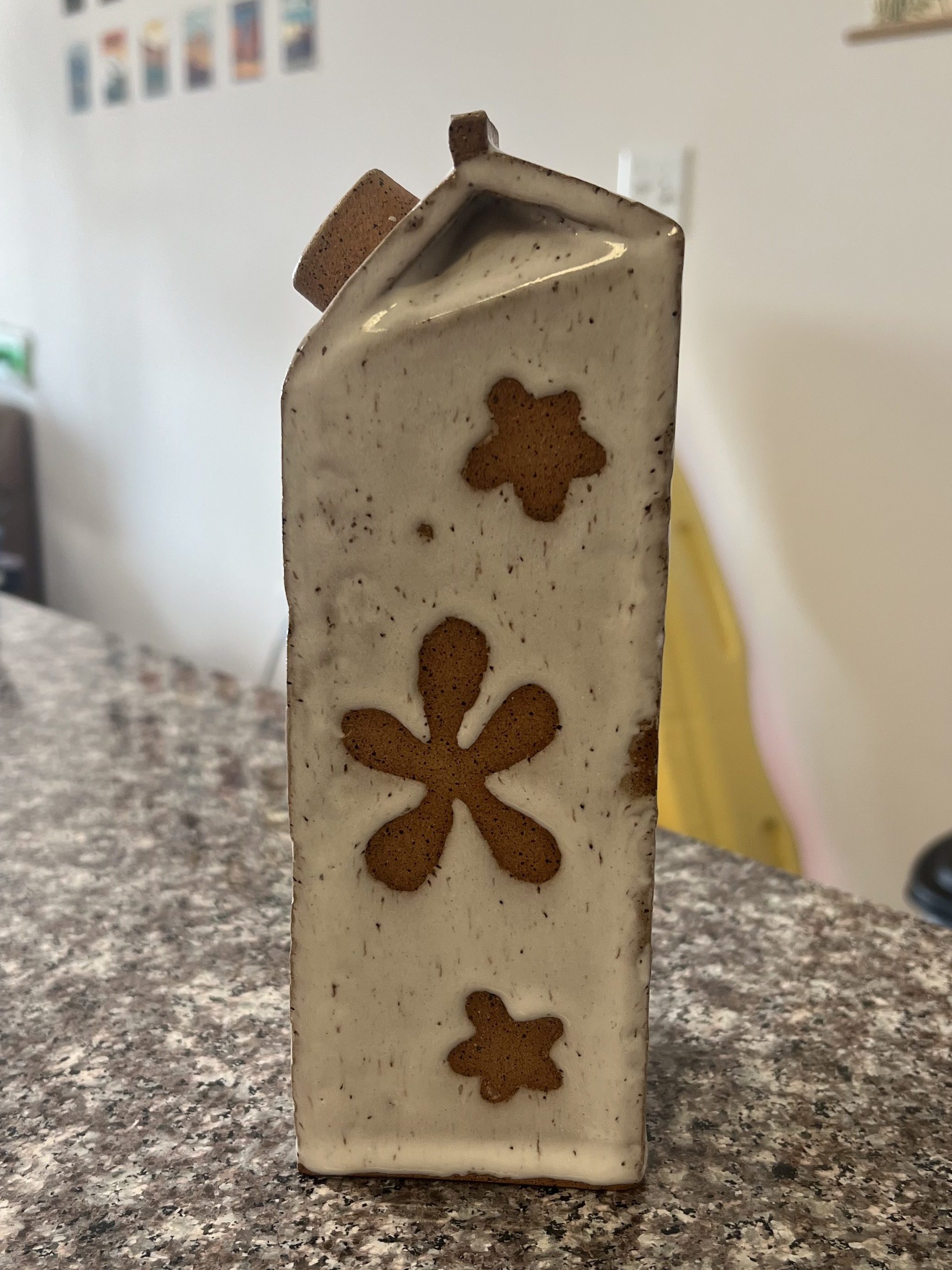
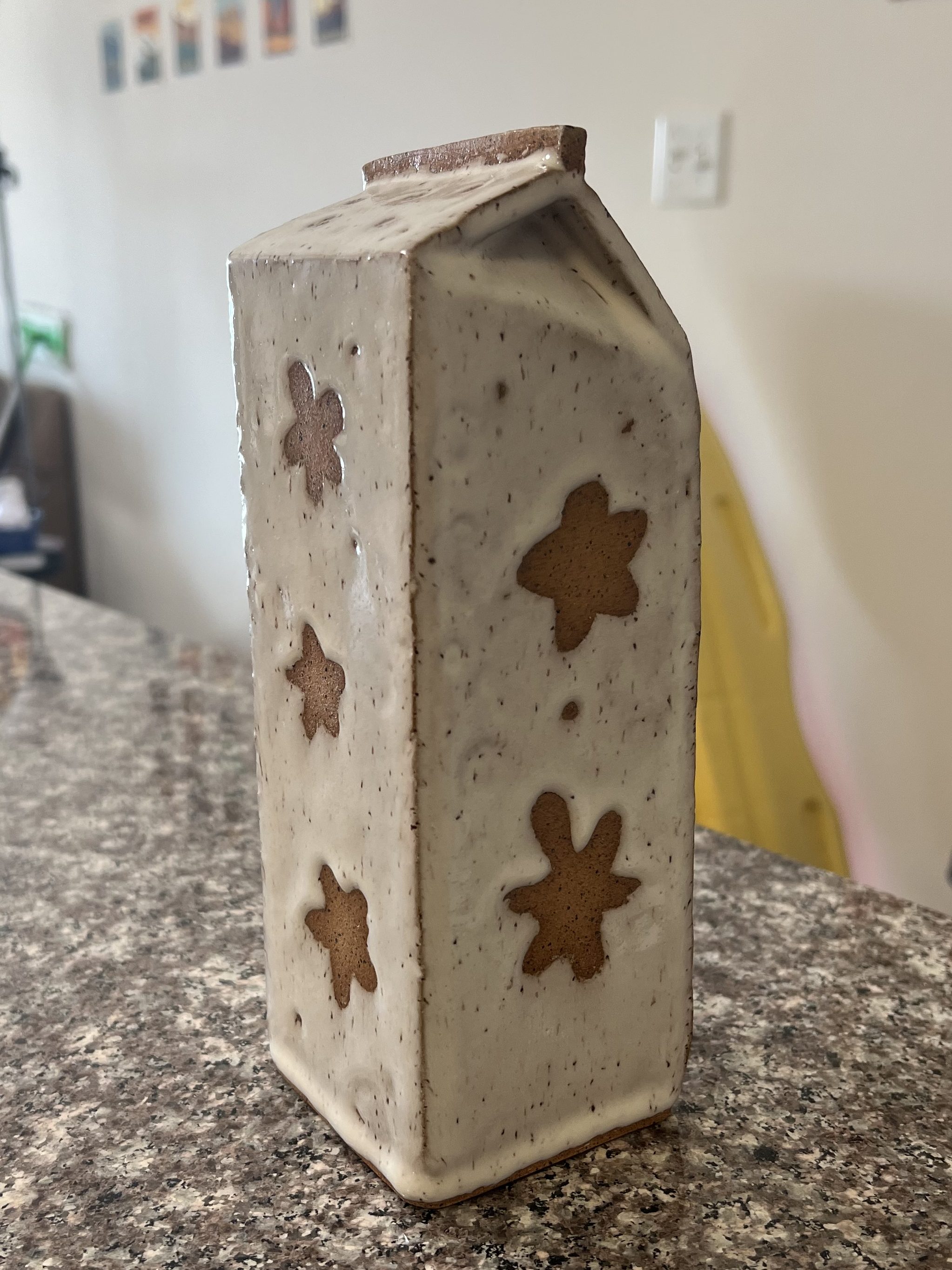
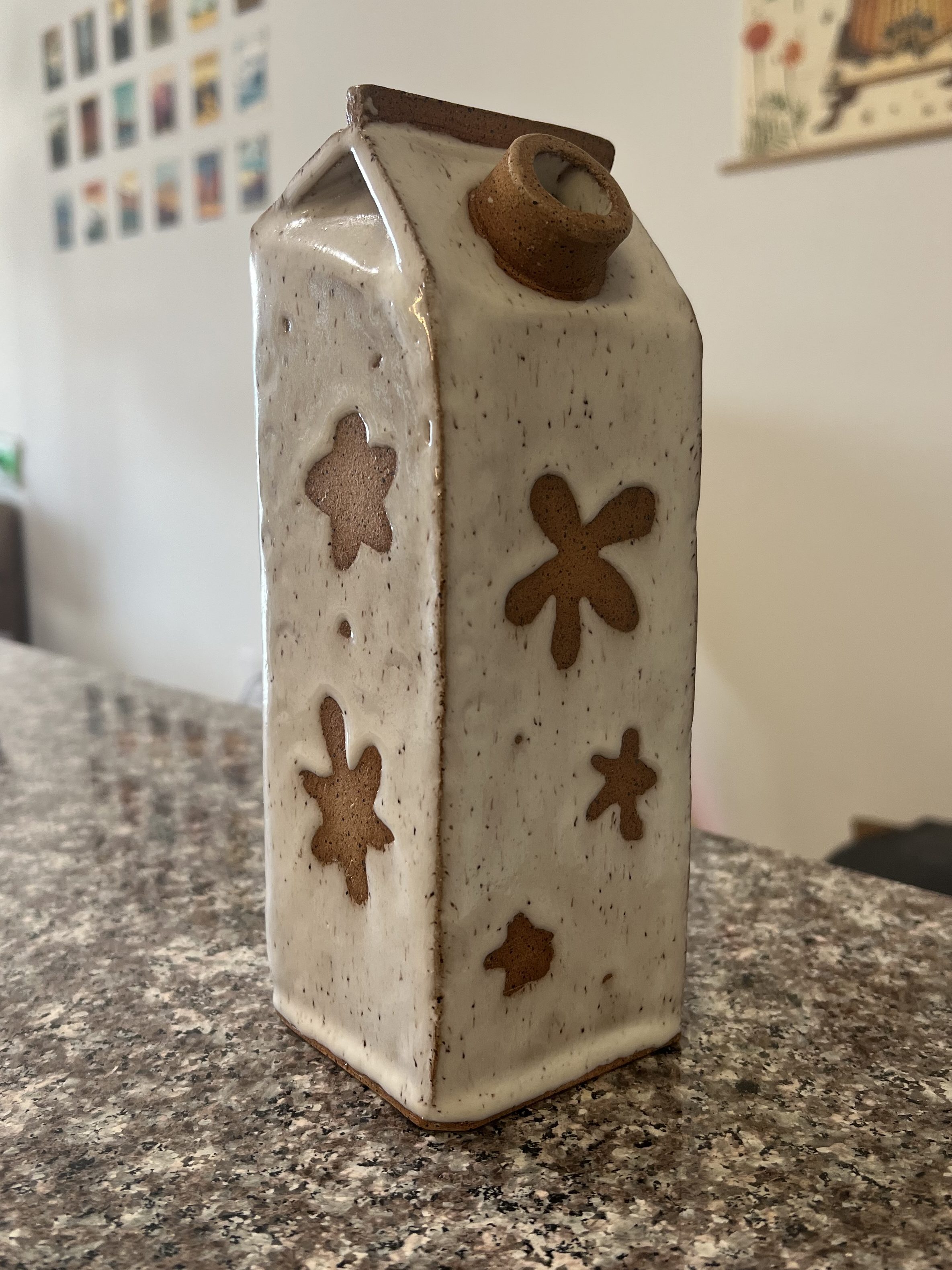
I love this white glaze – I think it looks so cool with my speckled clay. However, it is a very thick glaze, and it was hard to control when making my pattern, and it settled into a lot of the fine crevices and details on the piece. It was difficult to brush off and smooth out any of this glaze without chipping large pieces off.
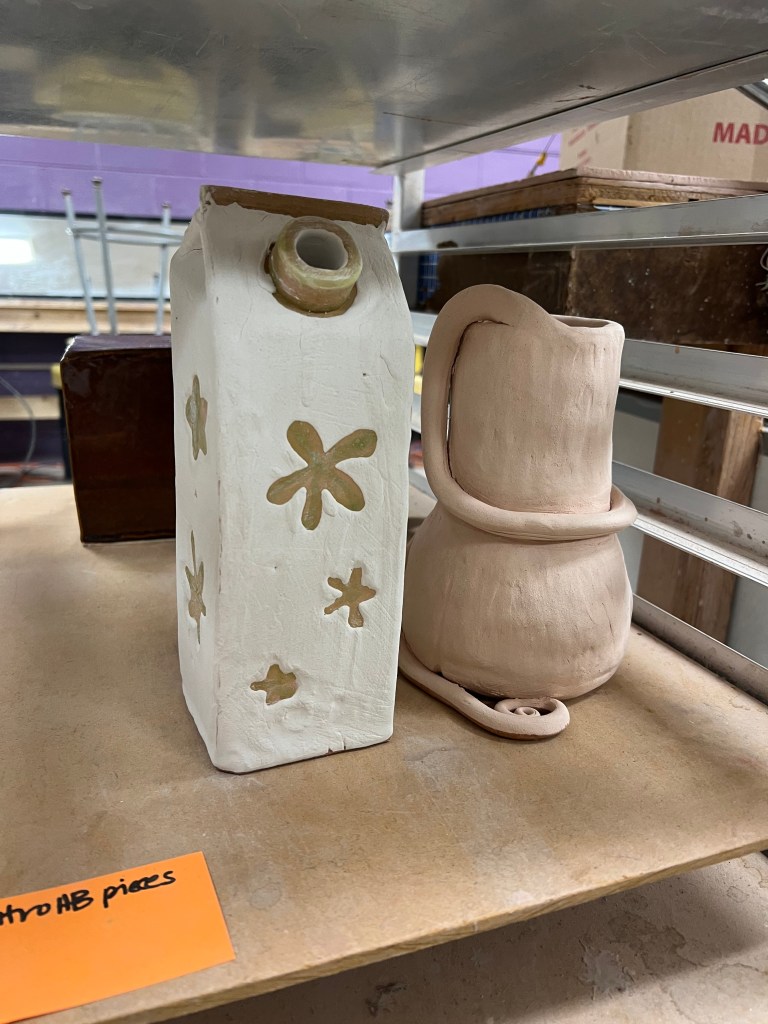
This is the first time I used wax resist to create patterns in my glaze. If I had experience with this glaze before, I would have probably tried a different style of glazing. With the way the speckles in the glaze look like they are running down the piece, I think I would have tried to make a dripping pattern, so that it looked like melted vanilla bean ice cream dripping down the piece.
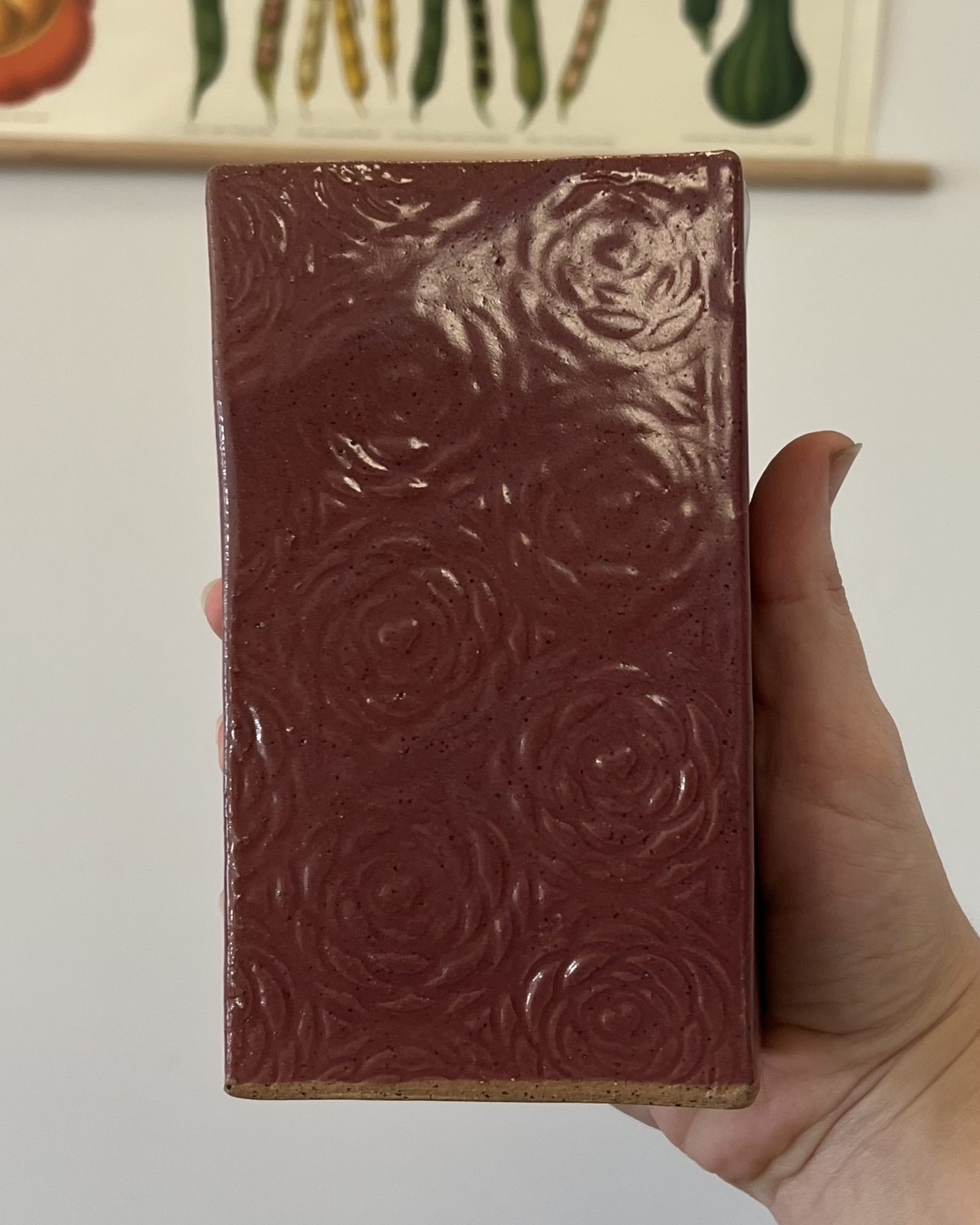
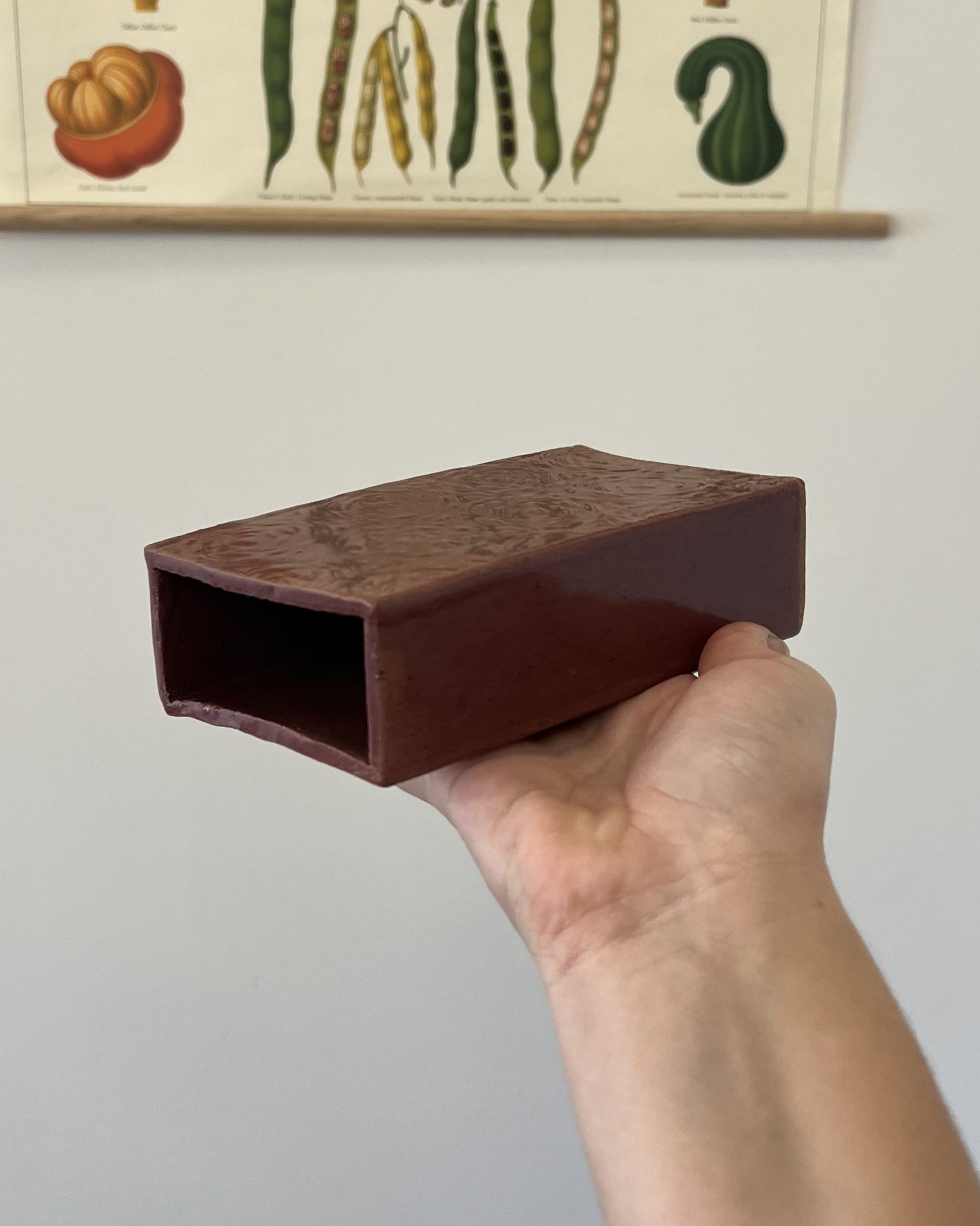
Another stiff slab build that I worked on was this box. It was supposed to be a box with a drawer inside, but there were problems with my slip bonding not holding, and the drawer not fitting properly during the drying process. It is now a rectangular box with an open end that is functioning as a bookend on my shelf, and it holds my extra bookmarks.
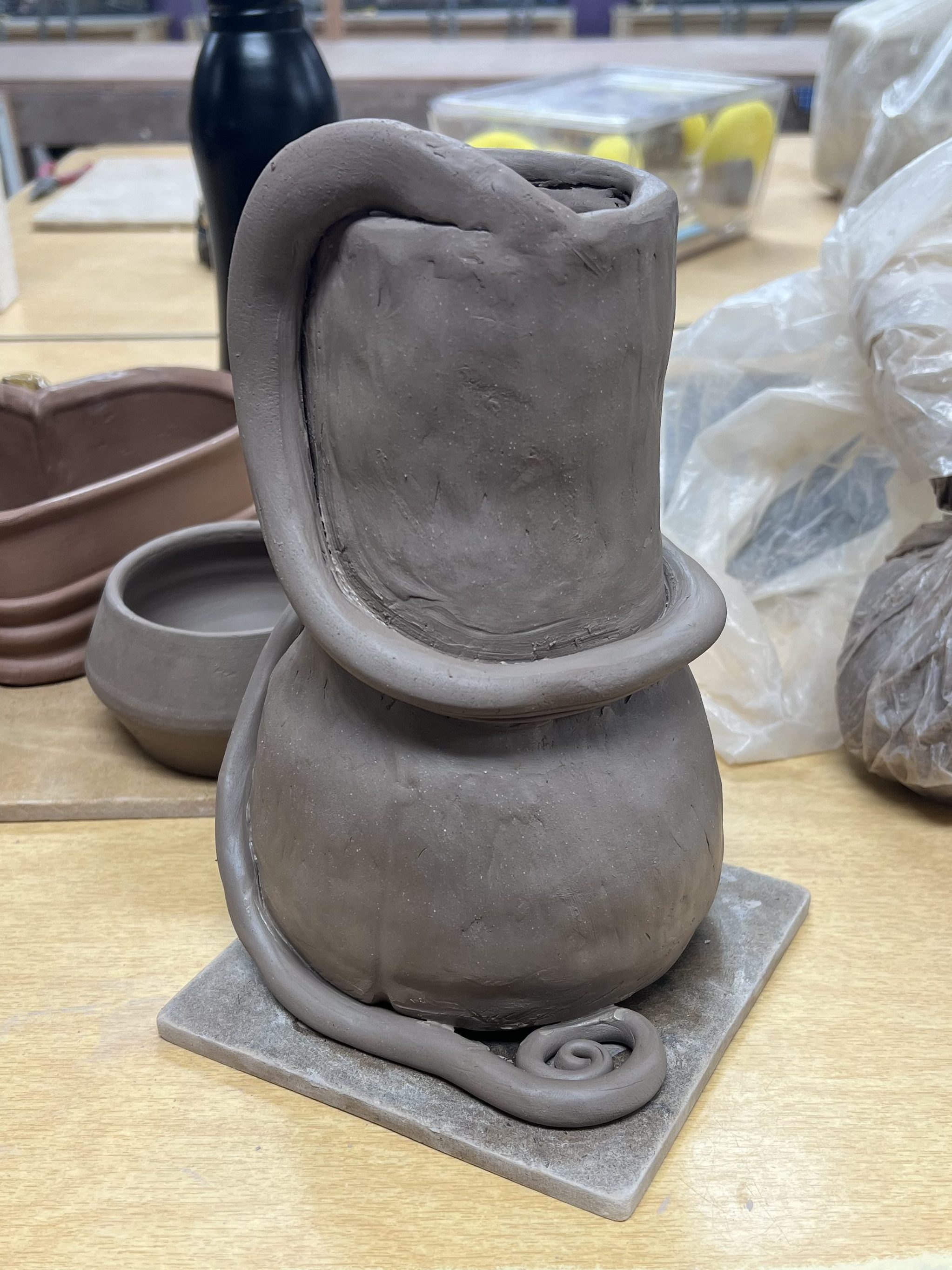
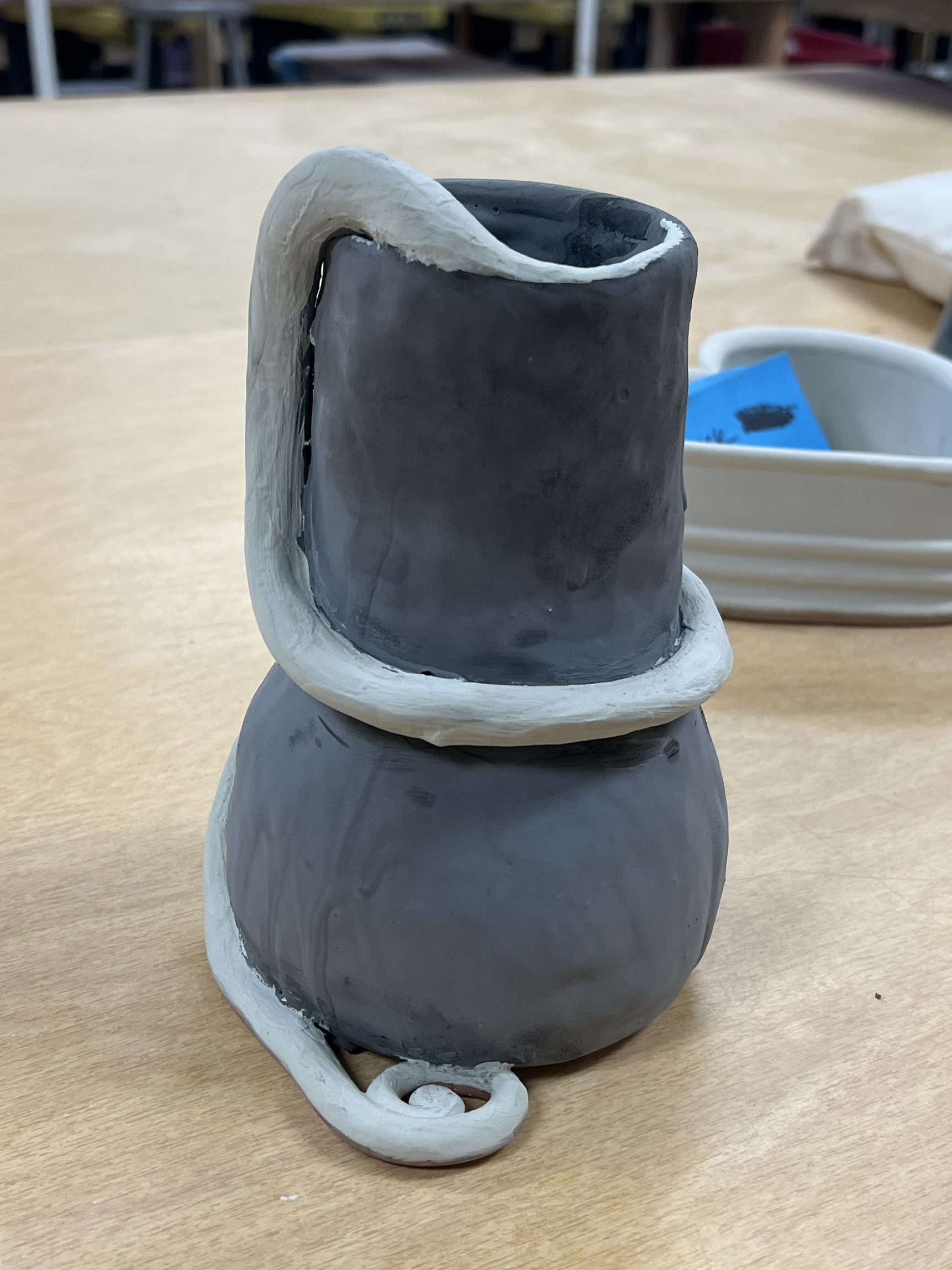
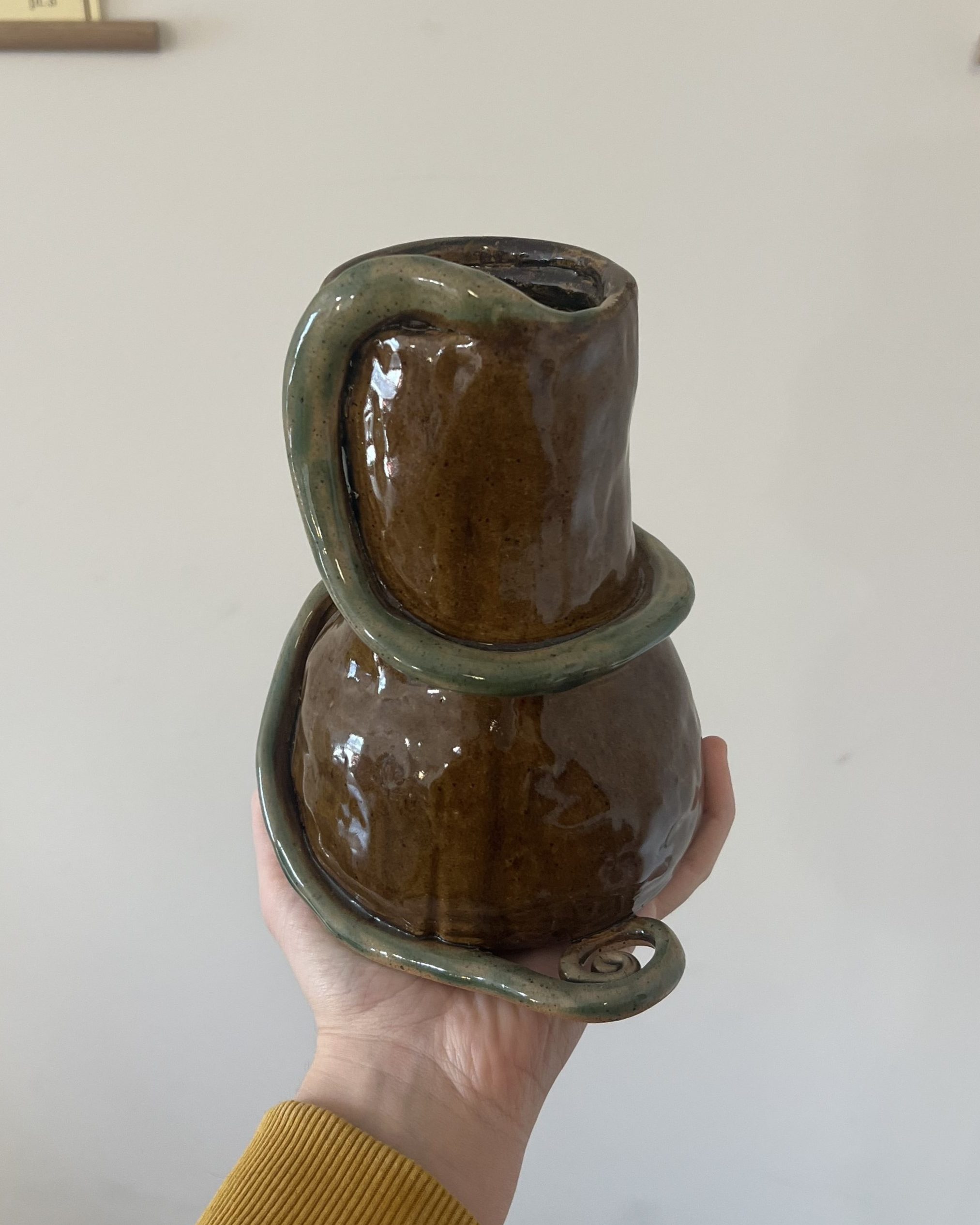
Another technique that we used was coiling. When starting this piece, I had no vision of what I was making, but it turned into this gourd vase.
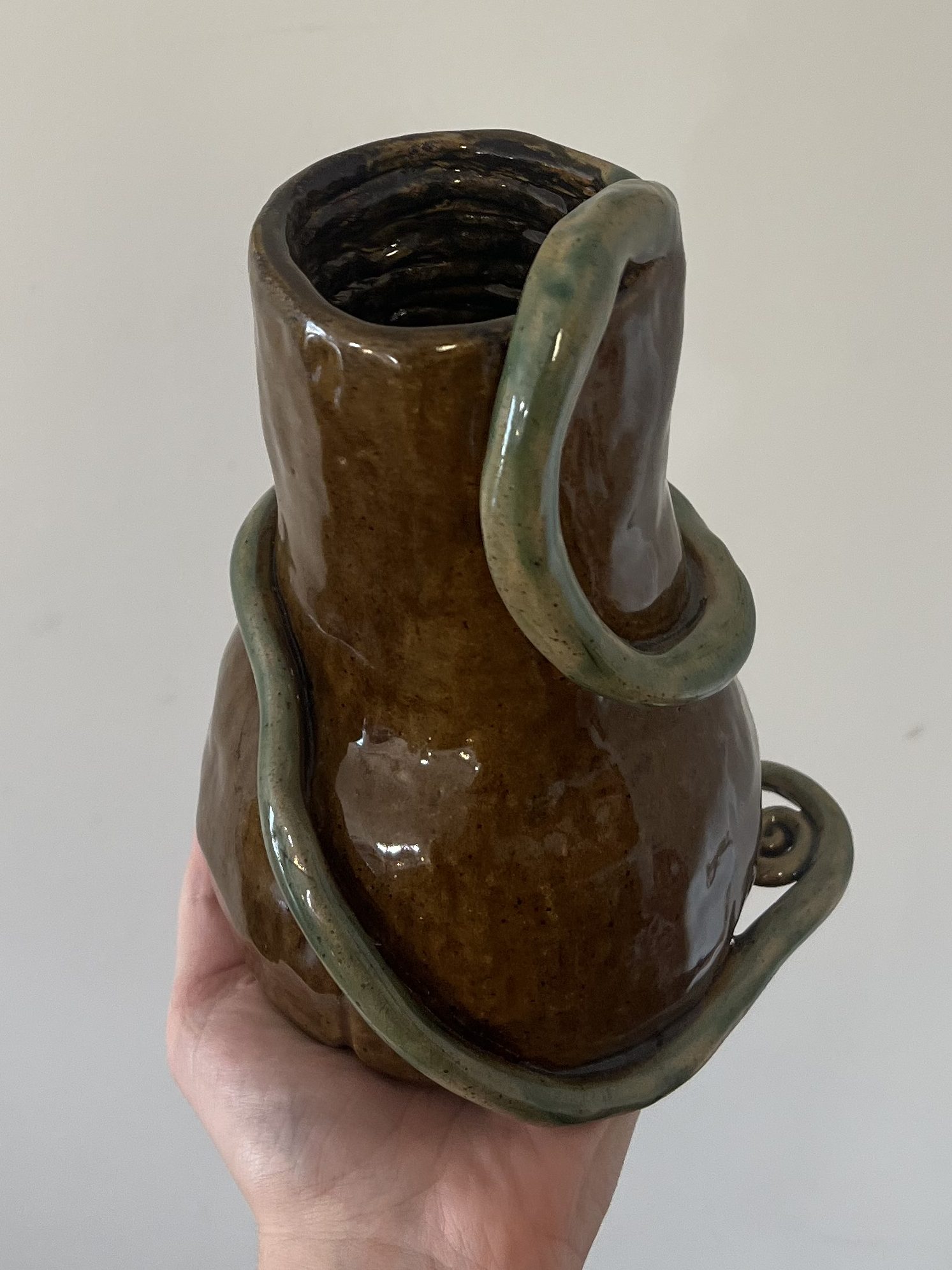
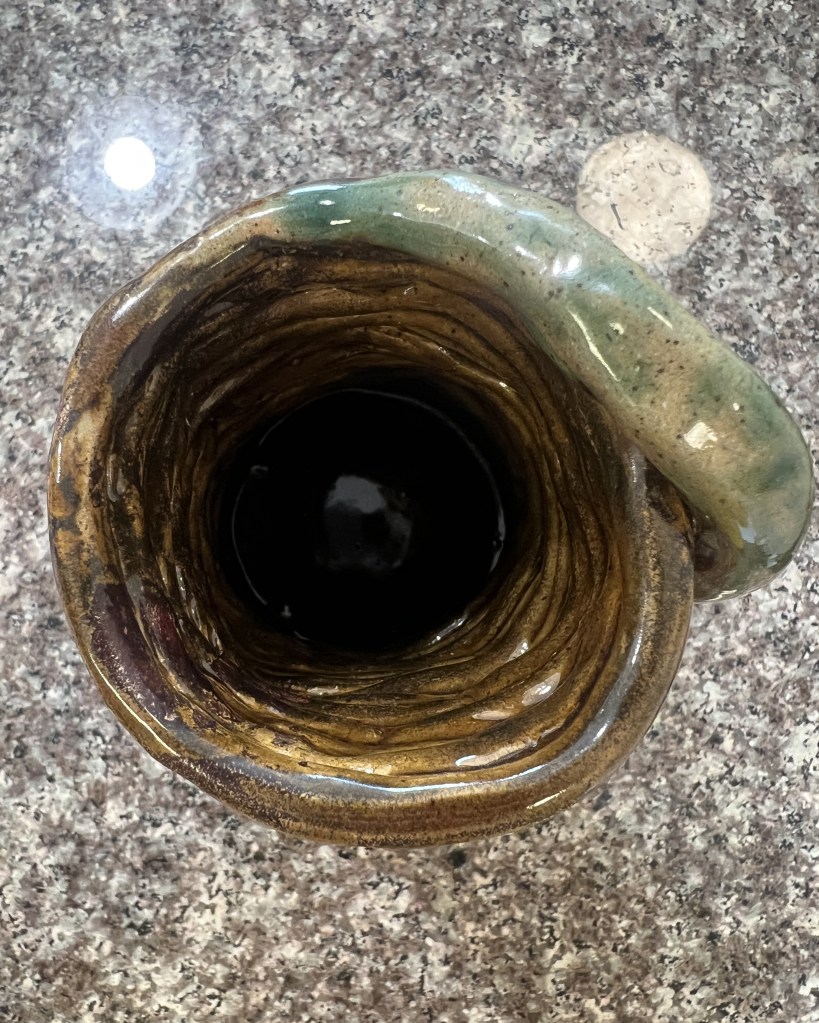
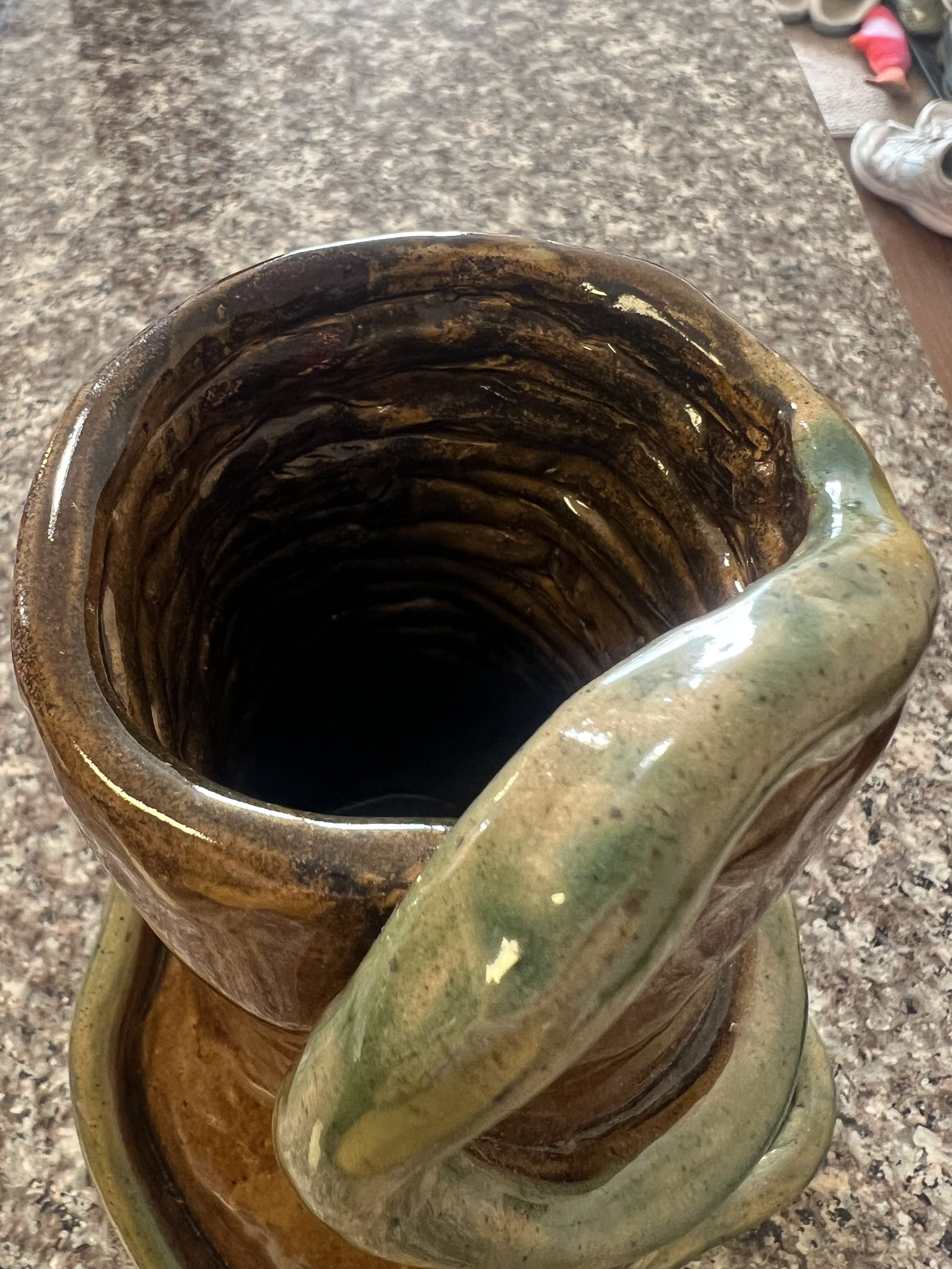
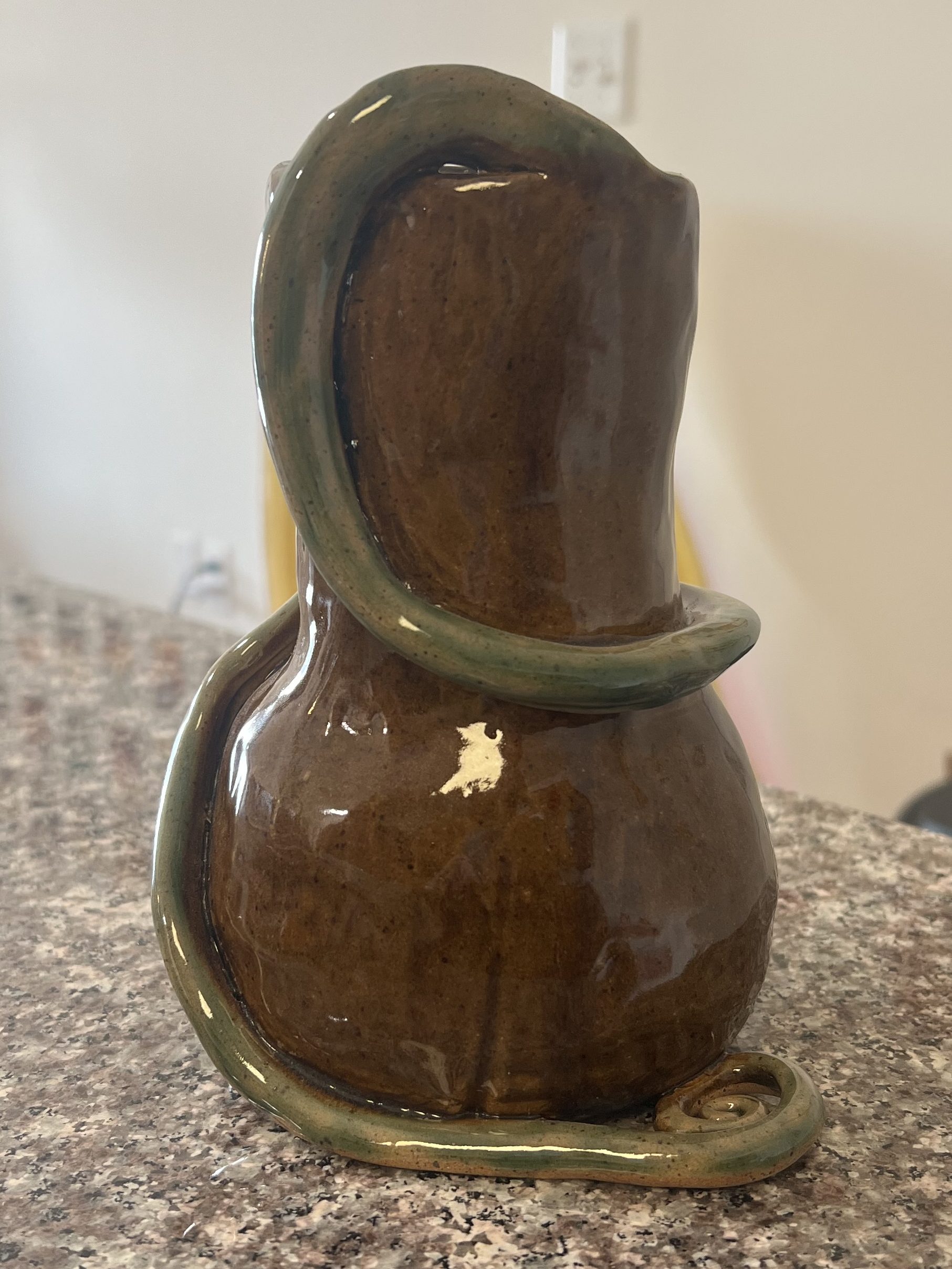
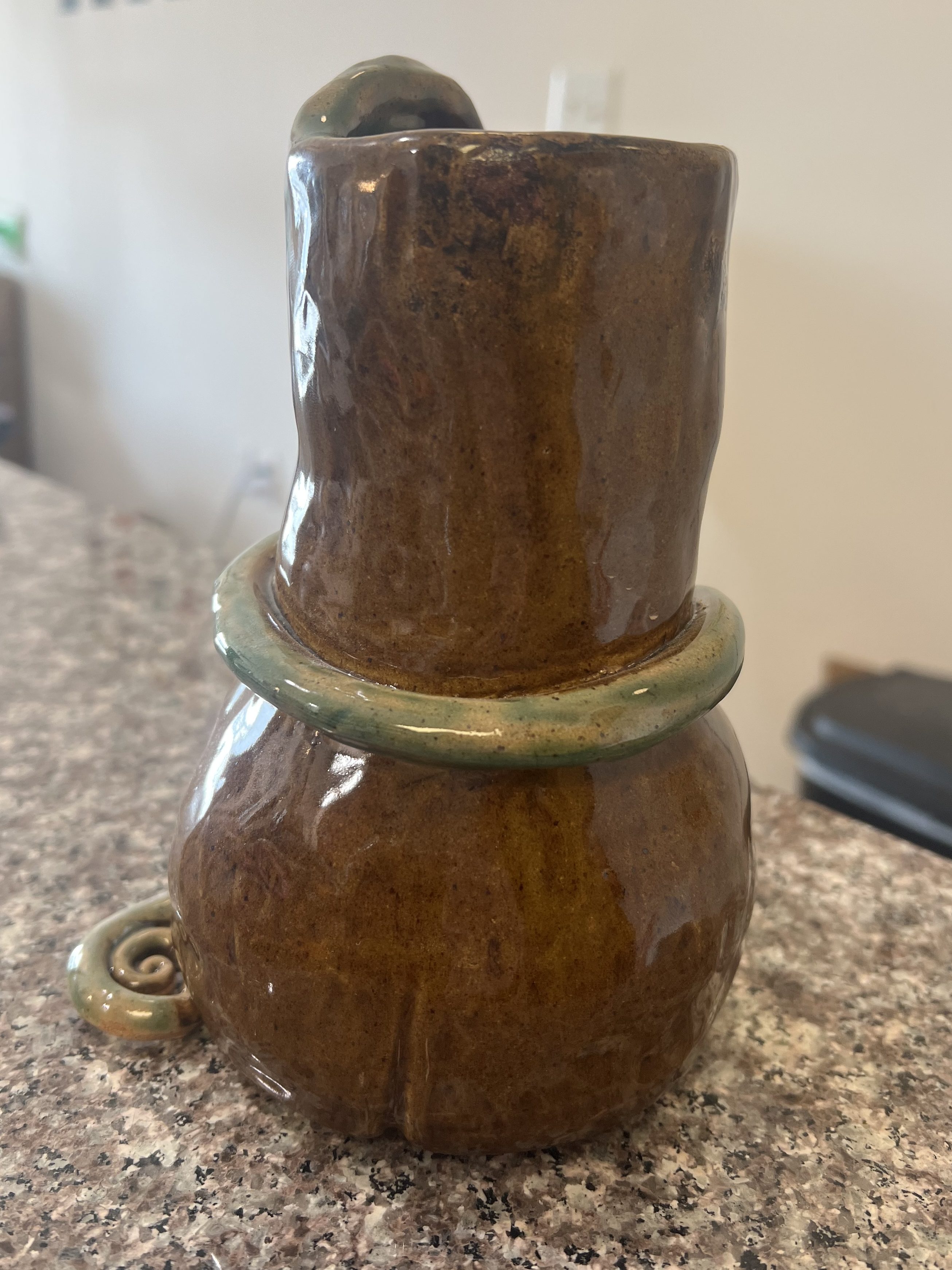
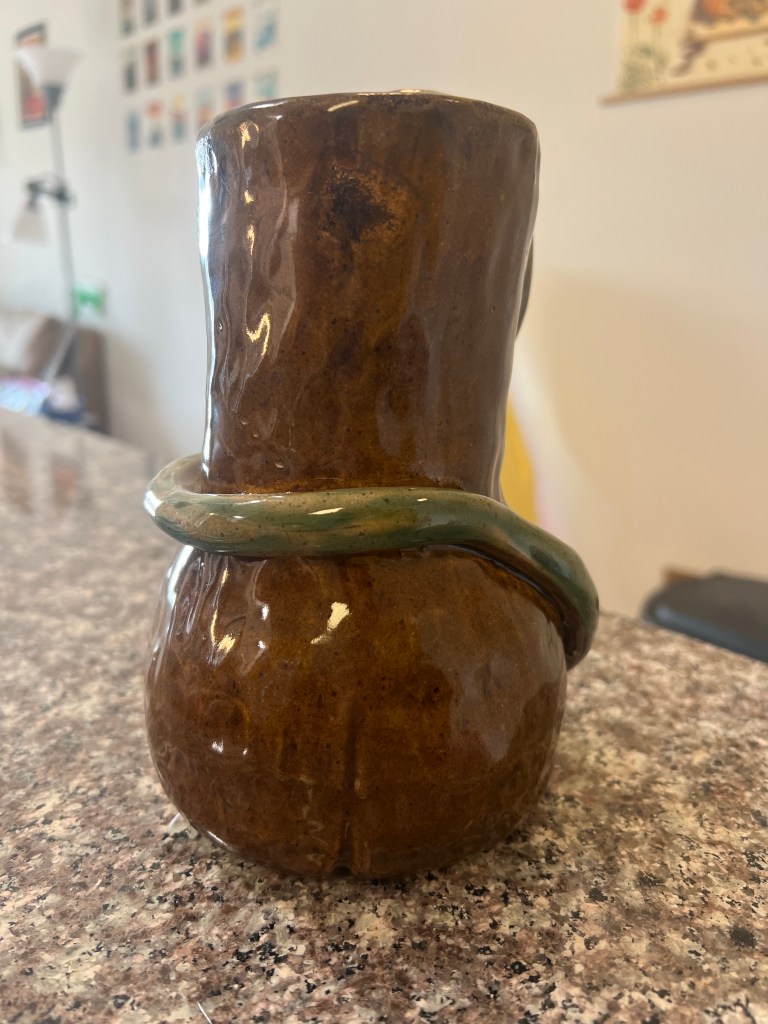
I love the texture on this piece from smoothing the outside with my hands, and the way that the transparent glazes show all of the little details. I also love the way that the coiling looks on the inside of the vase because I didn’t smooth it out. It reminds me of Uzumaki by Junji Ito.
Coiling and slab building may be my favorite hand-building techniques that I’ve learned so far.
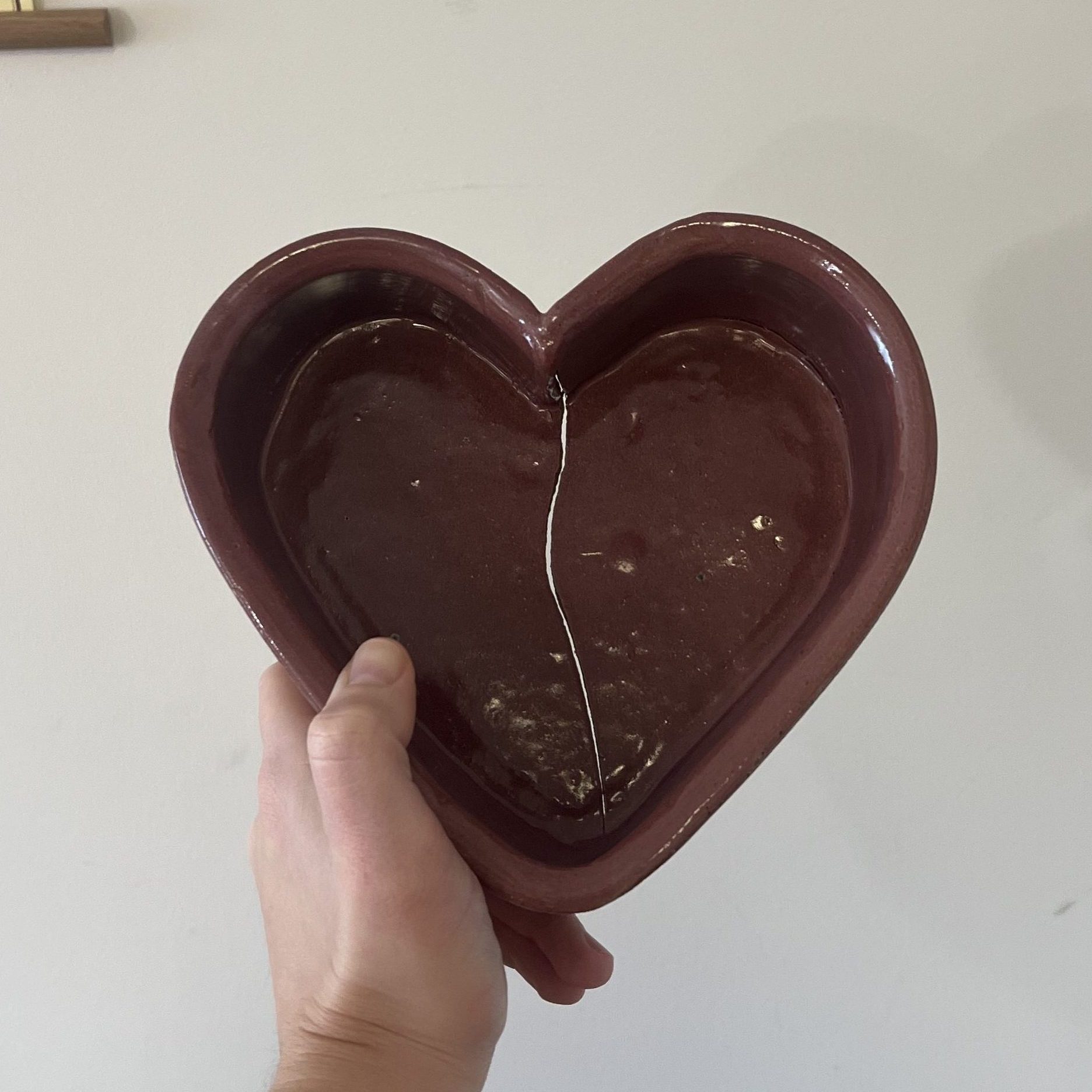
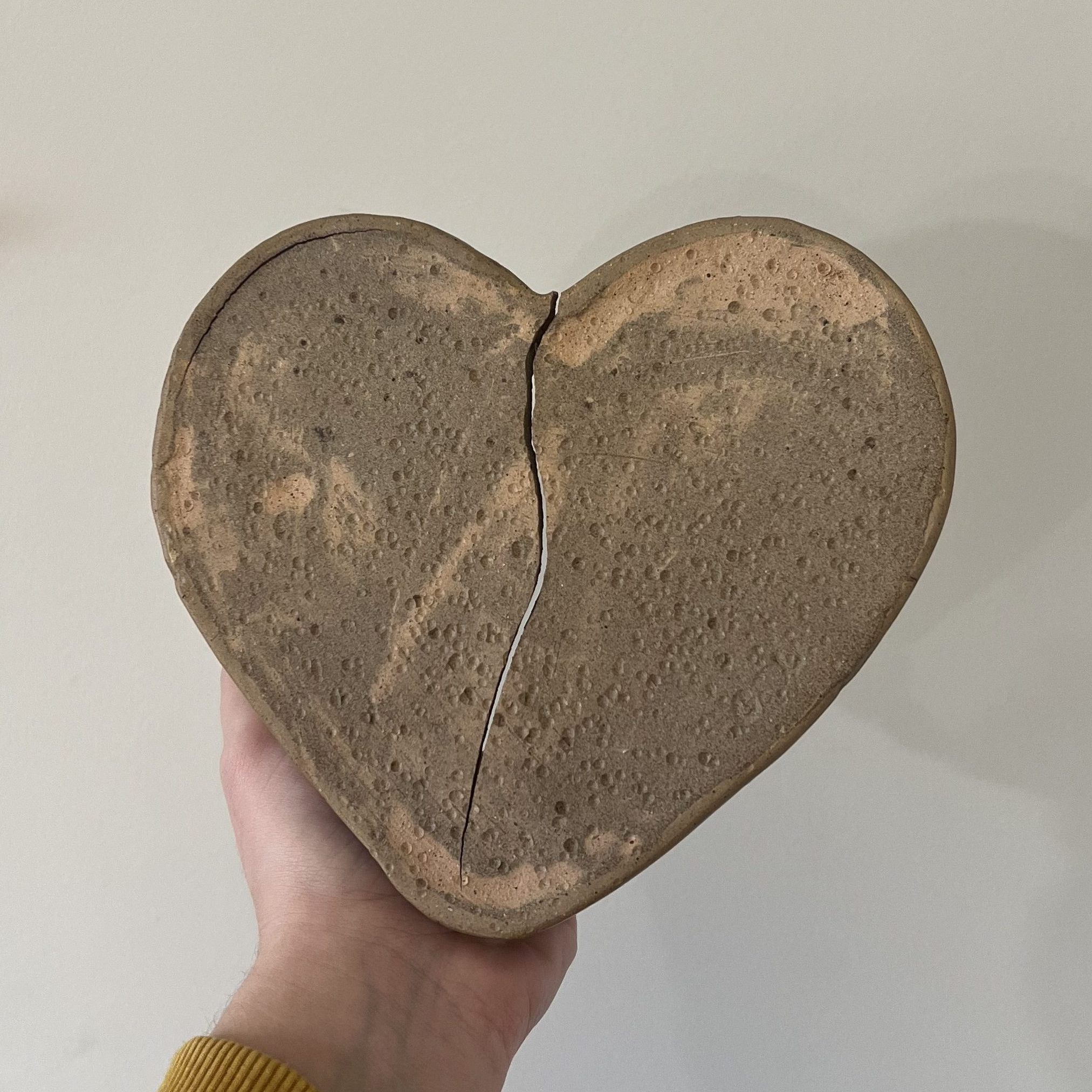
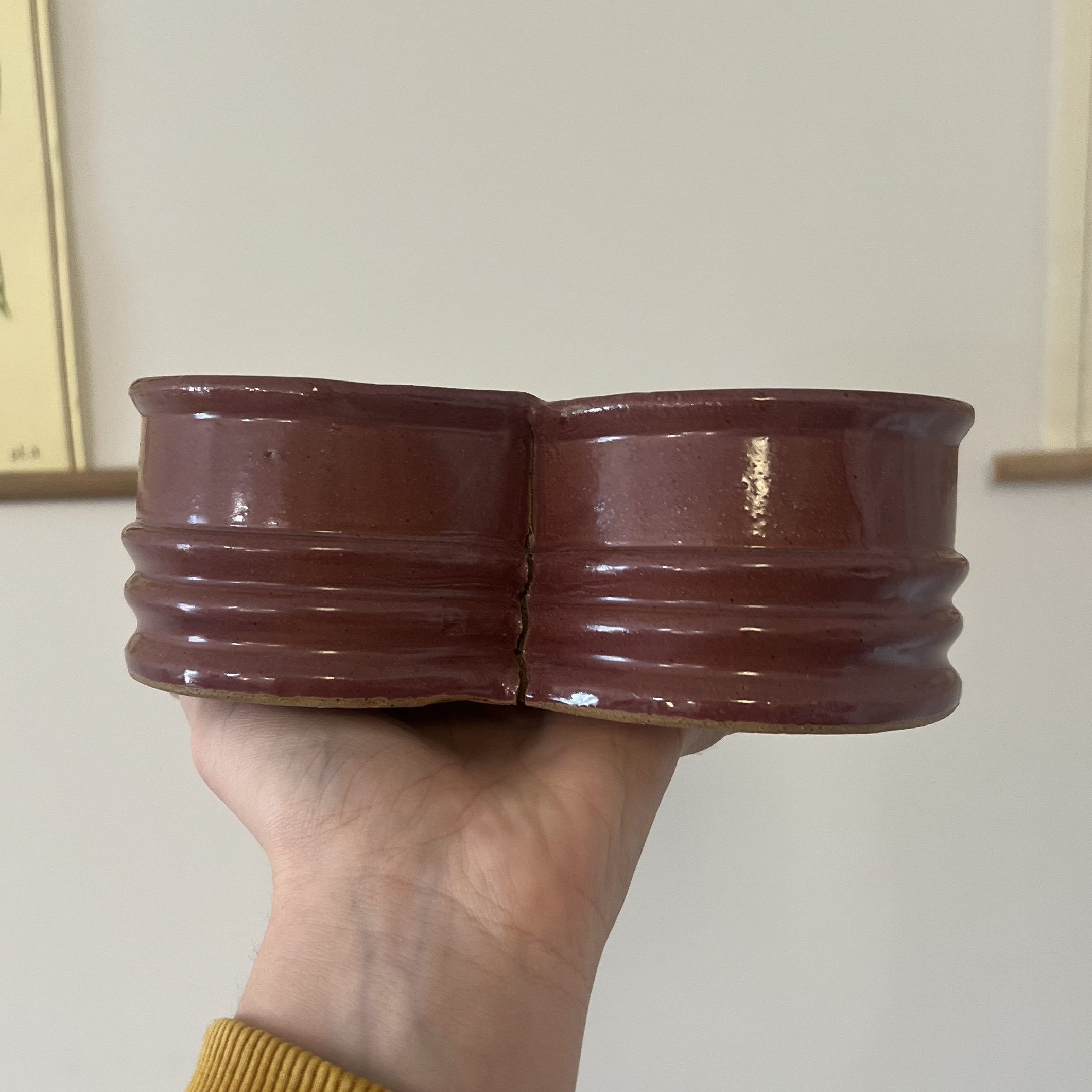
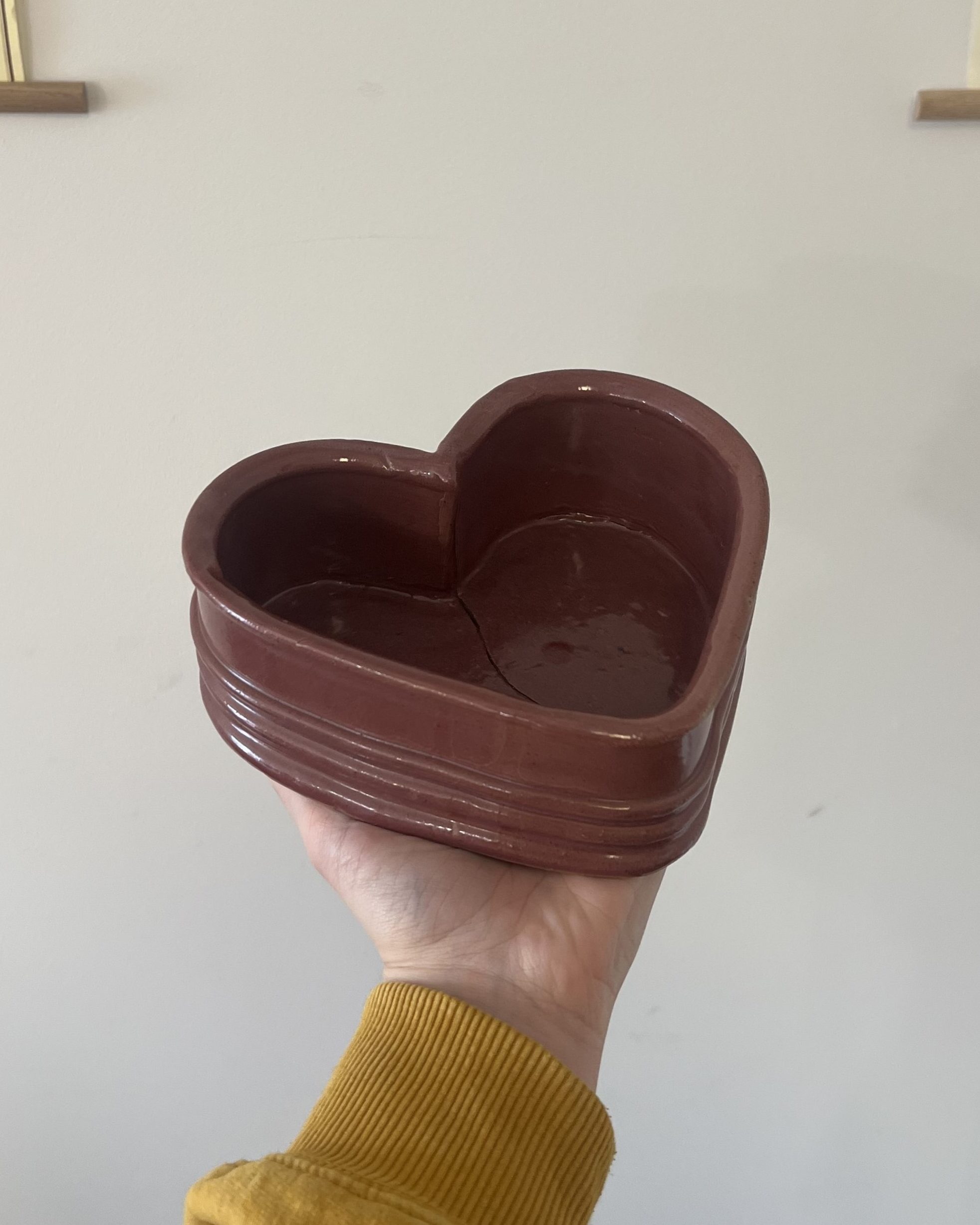
The biggest heartbreak (literally) of this class was this casserole dish. This piece was the one I was most excited for, but it cracked during the firing process. We used an extruder with recycled clay to make this piece, and I think a combination of the recycled clay and drying too quickly is the main culprit for the cracks.
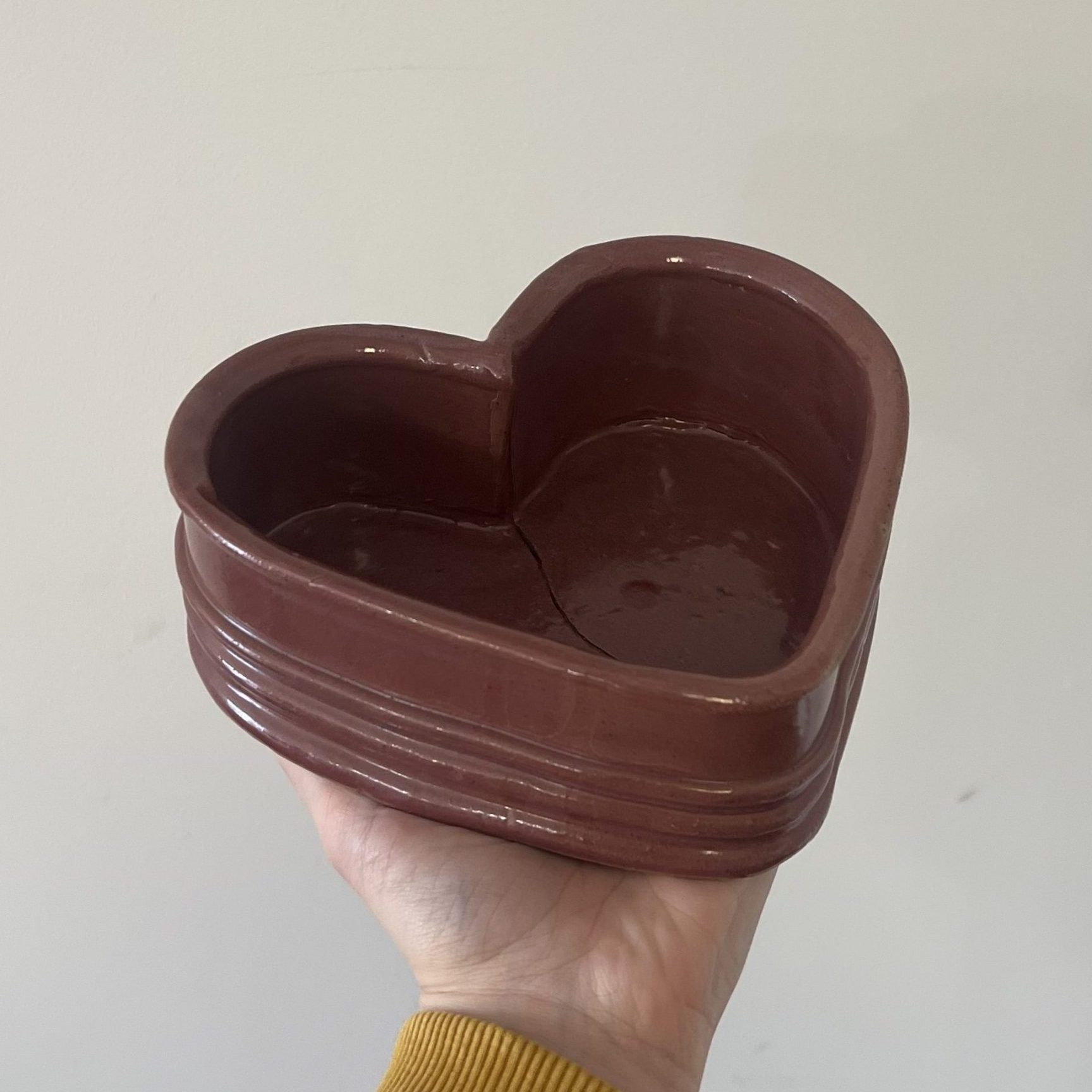
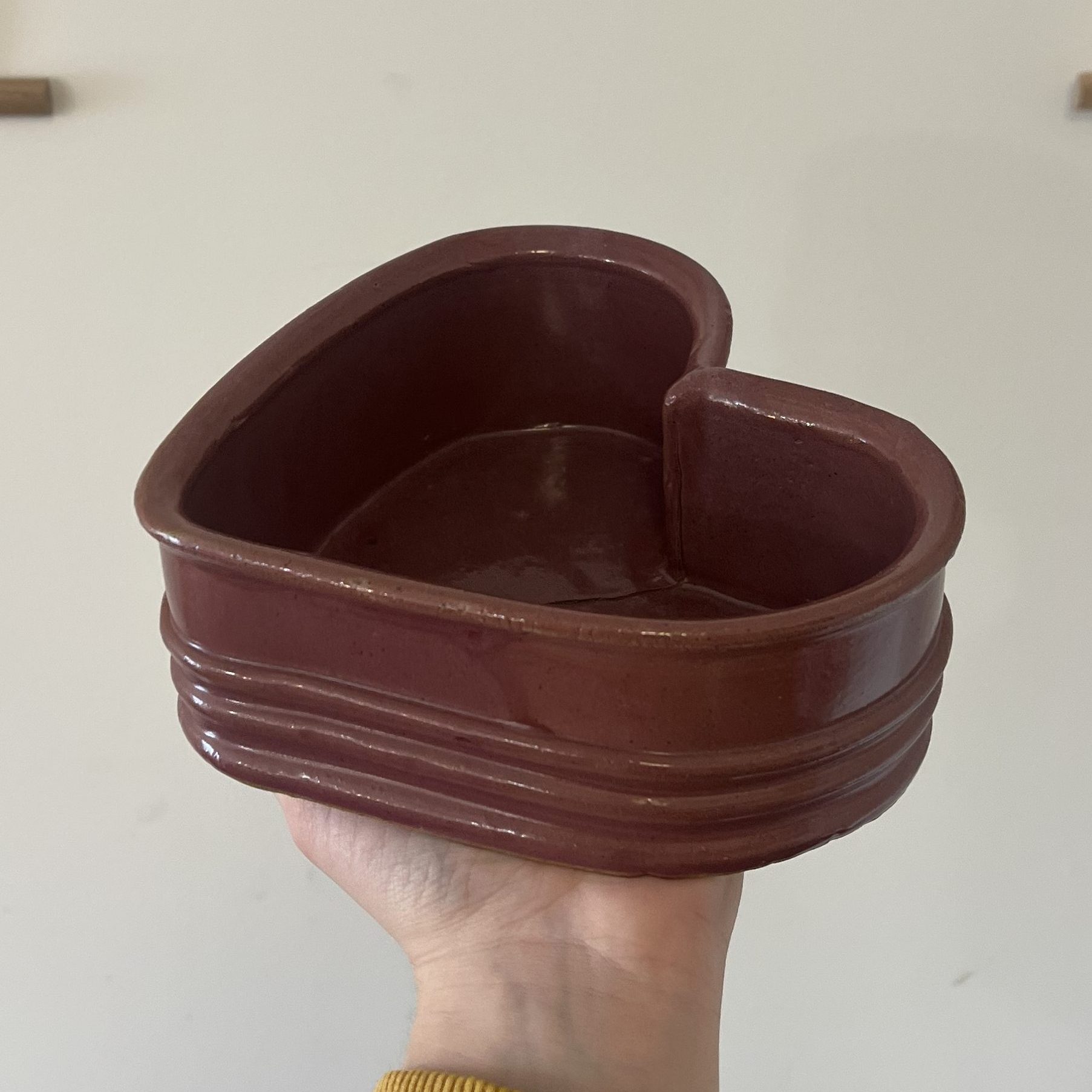
Small cracks were visible after bisque firing, and I was hoping that the glaze would help to seal them, but they just expanded in the glaze firing.
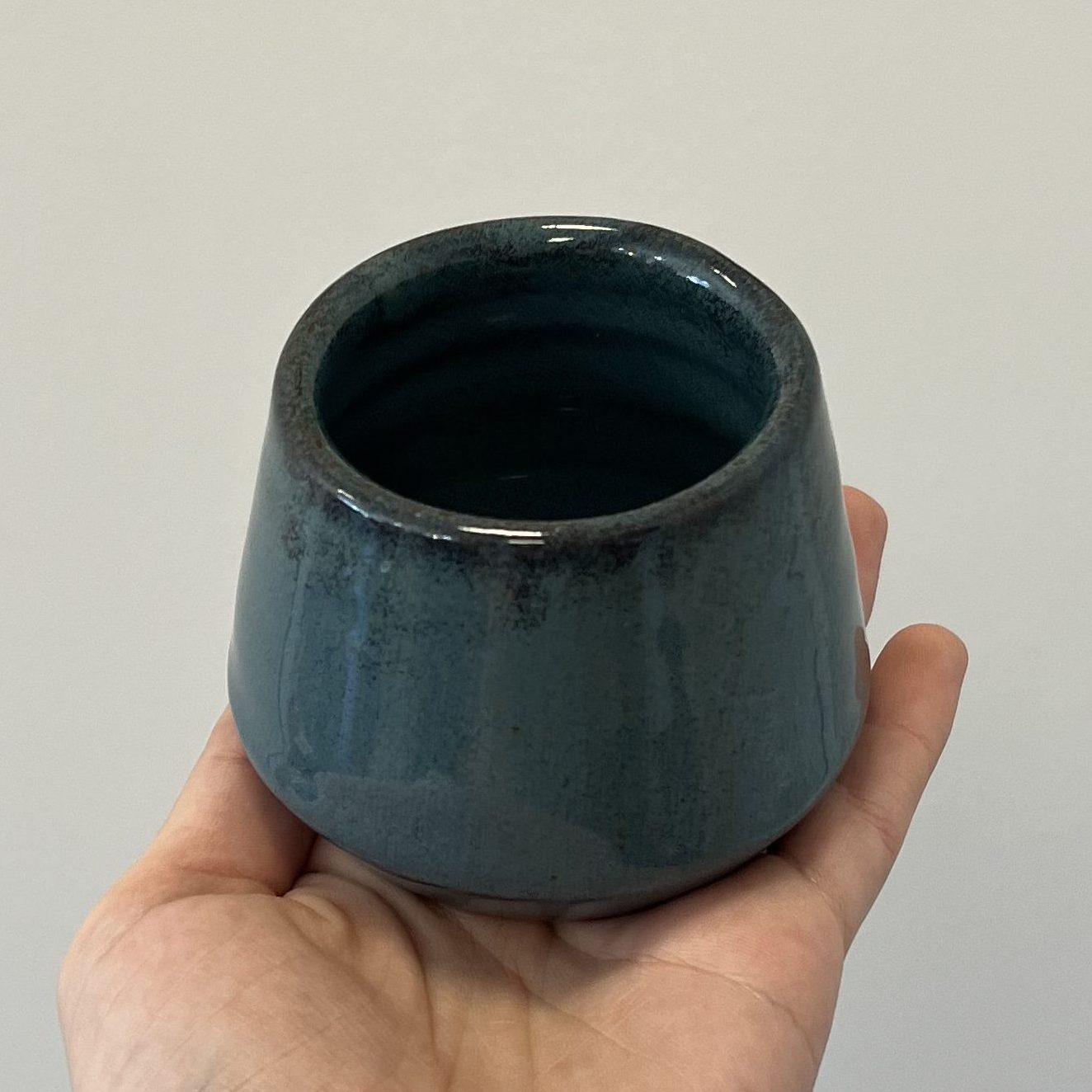
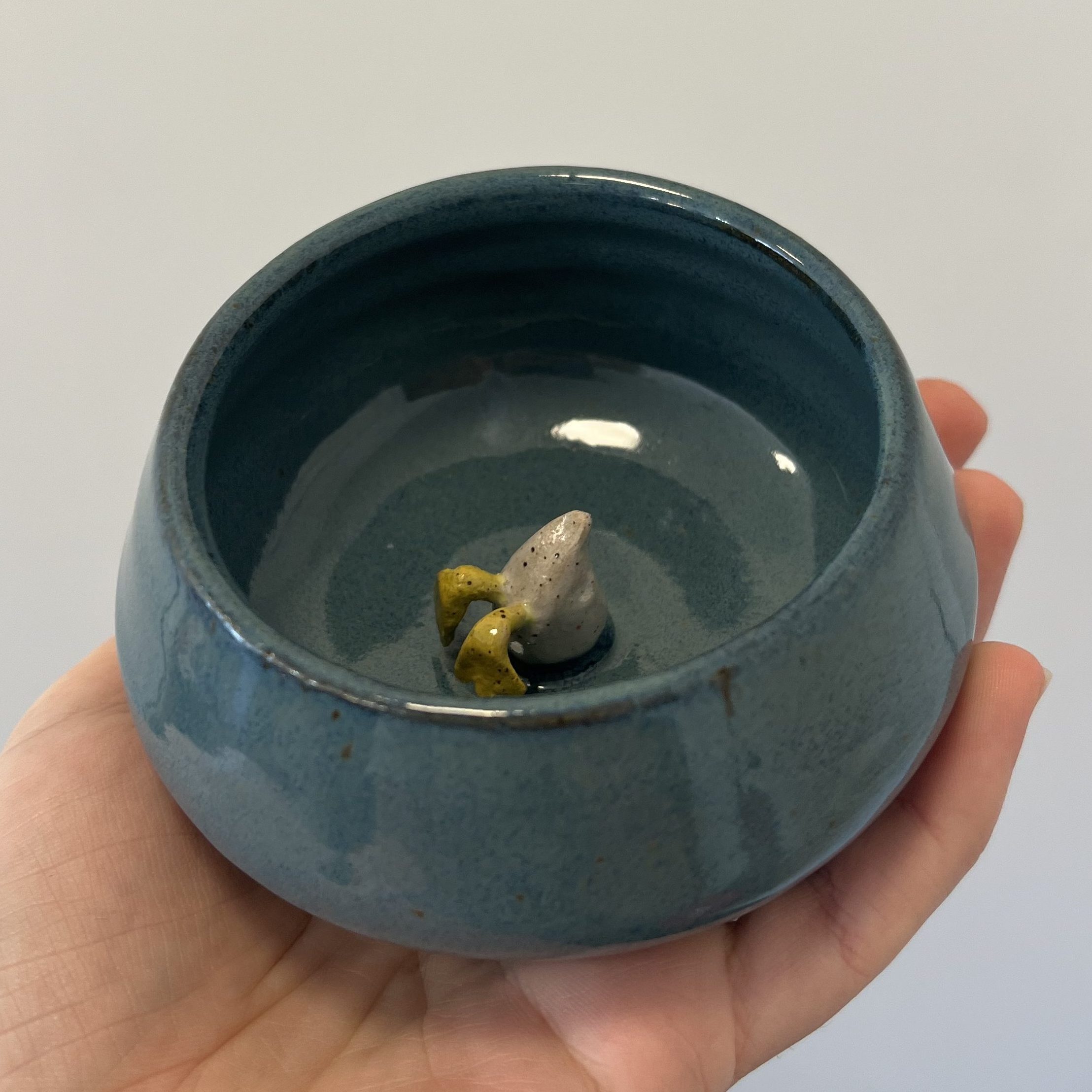
I did some wheel-throwing during my open studio time to make sure I didn’t lose the muscle memory. I also added some hand-built elements into my wheel pieces. I wanted to explore a little more with combining the two methods, like making lids for wheel-thrown pieces, but I didn’t have time in this class.
Overall, I think I like wheel throwing a little more than hand-building, but I appreciate the forgiveness of hand-building as compared to wheel. If you mess up on the wheel, it is difficult to recover, so you will probably have to scrap your piece and start over. But with hand-building, the clay can easily be reshaped or reused without much fuss.
Sadly, this is the last pottery class that I will take for a while, as I don’t have time to commit to the studio for a few months. Hopefully, I will be able to pick back up after I finish my Master’s in the spring.
 Grace Lentz
Leave a comment